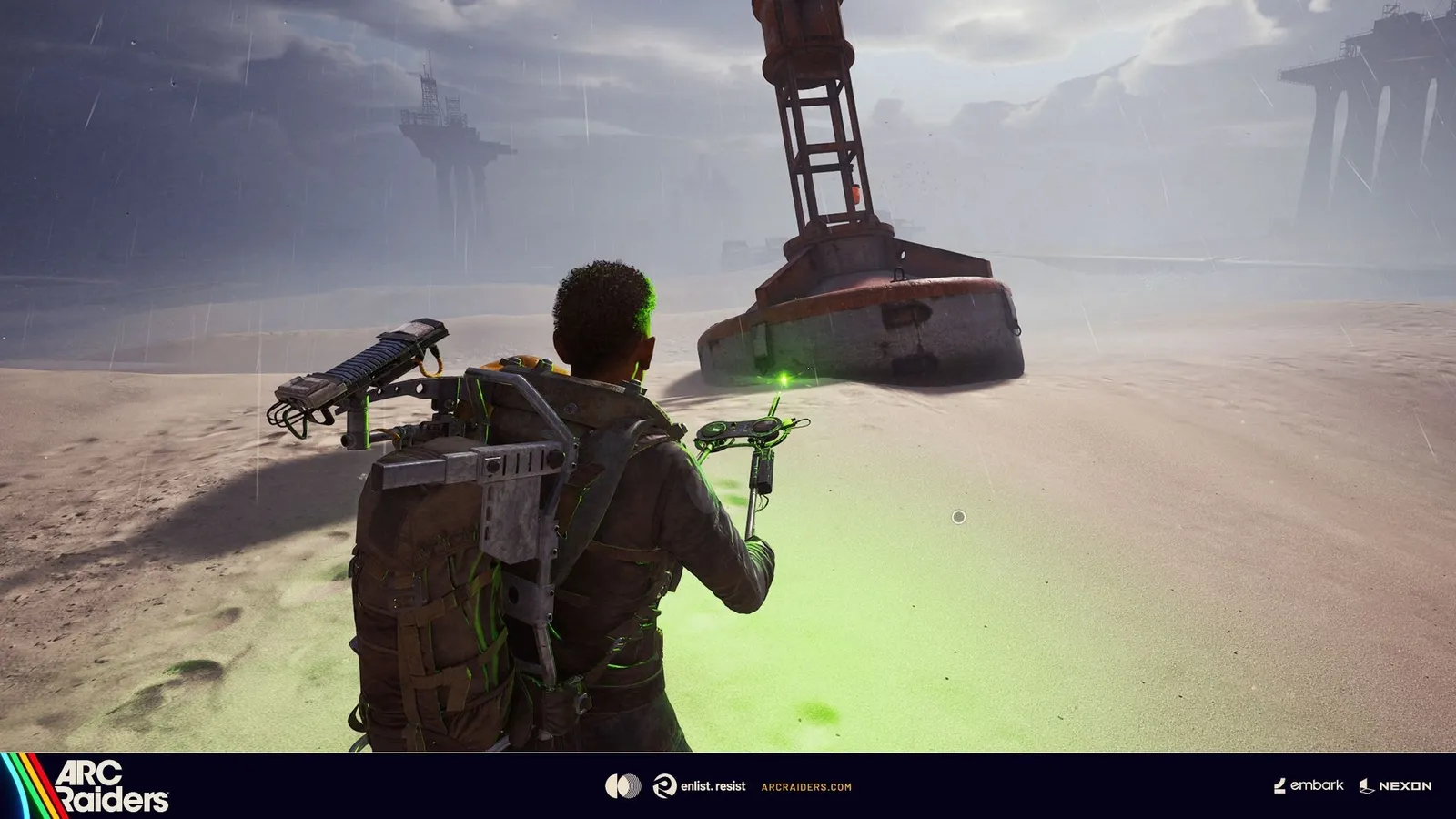
Embark Studios' third-person extraction shooter on Unreal Engine 5. Demanding on both GPU and CPU, with DLSS, FSR and frame generation support and a few expensive lighting options.
What limits performance in ARC Raiders
ARC Raiders runs on Unreal Engine 5 (Extraction shooter, 2025). Official and researched system requirements:
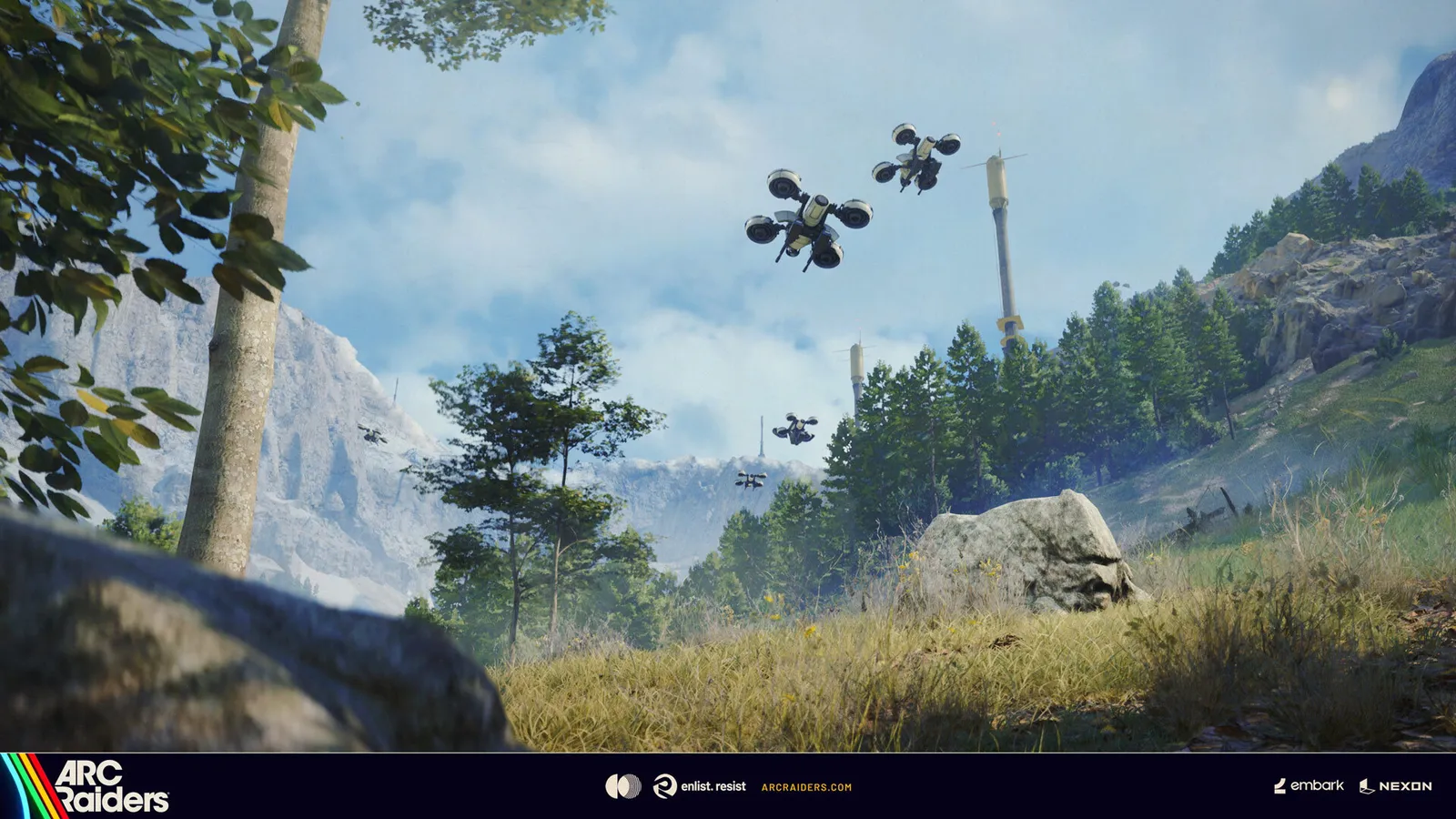
Foliage-heavy scenes with many effects cost the most performance.
- Minimum: OS Windows 10 or later 64-bit (latest update); CPU Intel Core i5-6600K or AMD Ryzen 5 1600; RAM 12 GB; GPU NVIDIA GeForce GTX 1050 Ti, AMD Radeon RX 580 or Intel Arc A380; DirectX Version 12
- Recommended: OS Windows 10 or later 64-bit (latest update); CPU Intel Core i5-9600K or AMD Ryzen 5 3600; RAM 16 GB; GPU NVIDIA GeForce RTX 2070, AMD Radeon RX 5700 XT or Intel Arc B570; DirectX Version 12
The settings that cost the most frames
Menu names and sections below are the ones in the game. Start here, test after each change, and keep the ones that give a clear gain.
- Display Resolution (Video): native resolution, or lower for more frames. Use your monitor's native resolution and scale down with the upscaler.
- Vsync (Video): Disabled. V-Sync adds input lag. Only enable it if you have no G-Sync or FreeSync monitor and see tearing.
- Frame Rate Limit (Video): Unlimited. Cap just below your refresh rate with G-Sync/FreeSync, or leave unlimited for the lowest latency.
- Upscaled Resolution (Video): 100%. Keep this at 100% and let the DLSS/FSR mode do the scaling.
- Nvidia RTX Global Illumination (Graphics): Static. Dynamic lighting looks better but is one of the most expensive options. Static is the safe choice.
- View Distance (Graphics): Low on the Low preset up to Epic on Ultra. Controls how far objects stay detailed; High is a good balance.
- Anti-Aliasing (Graphics): Low on the Low preset up to Epic on Ultra. Smooths jagged edges; Medium is enough when you use DLSS or FSR.
- Shadows (Graphics): Low on the Low preset up to Epic on Ultra. Shadow quality is one of the biggest GPU costs in Unreal Engine 5.
- Post Processing (Graphics): Low on the Low preset up to Epic on Ultra. Bloom, colour grading and similar screen effects.
- Effects (Graphics): Low on the Low preset up to Epic on Ultra. Explosion, smoke and particle quality; heavy in big fights.
- Reflections (Graphics): Medium on the Low preset up to Epic on Ultra. Reflective surfaces and water. Guides avoid Low because it turns screen-space reflections off entirely.
- Global Illumination Resolution (Graphics): Medium. Higher values cost some FPS with no gameplay gain; Medium is the guide pick.
- Foliage (Graphics): Low. The setting guides lower first when FPS is short; Low also makes it easier to spot enemies in bushes.
Smaller options
| Setting | Where | Recommended |
|---|---|---|
| Motion Blur | Video | Off |
| Textures | Graphics | Low on the Low preset up to Epic on Ultra |
Upscaling and frame generation
Upscalers: DLSS, FSR, XeSS, DLAA. Frame generation: DLSS, FSR. Latency reduction: NVIDIA Reflex and AMD Anti-Lag 2.
- AMD Anti-Lag / NVIDIA Reflex (Video). Options: Off, On. Cuts input latency on supported GPUs at almost no cost.
- Resolution Scaling Method (Video). Options: Off, NVIDIA DLSS, FSR 3, XeSS, DLAA. DLSS on NVIDIA, FSR 3 on AMD, XeSS on Intel Arc. The mode (Quality, Balanced, Performance) is set in the quality option next to it.
- Nvidia DLSS Frame Generation (Video). Options: Off, On. Needs an RTX 40 or newer GPU (FSR 3 frame generation works on other GPUs) and a solid base frame rate; it adds some input delay with mouse and keyboard.
How to show the FPS counter
- Open the Settings menu and find "In-Game Performance Overlay".
- Set it to "Simple" to show the FPS count on screen.
- Alternative: Steam > Settings > In Game > "In-game FPS counter", or the NVIDIA app overlay.
More ARC Raiders tips
Use the DLSS Transformer model
- On an NVIDIA GPU, set the Resolution Scaling Method to NVIDIA DLSS.
- Pick the Transformer model for DLSS (the "Nvidia DLSS Model" option) for a sharper image than the older CNN model.
Guides disagree on the best mode: DLAA for a quality goal, Balanced or Quality for more FPS. Avoid Performance unless you need it.
Frame generation: only with a high base FPS
- Turn "Nvidia DLSS Frame Generation" on only if you already get roughly 100 fps without it.
- It adds input delay, which you notice most with mouse and keyboard.
Plan for the install size
- The install is reported at roughly 130 GB of game files. An SSD is not required but recommended.
Quick checks that help in any game
Before you spend an hour in the menus, rule out the common system-level causes of low FPS and stutter in ARC Raiders:
- Update your graphics driver and restart. Game-ready drivers often include fixes for new releases.
- Set the Windows power plan to Balanced or High performance, and turn on Game Mode.
- Enable the XMP or EXPO memory profile in your BIOS. Many PCs run RAM below its rated speed, which costs frames in CPU-limited games.
- Install the game on an SSD, not a hard drive, to avoid hitching when assets stream in.
- Close browsers, launchers and overlays you do not need. Each one takes CPU time and memory.
- Watch your temperatures. A CPU or GPU that overheats lowers its clocks, and the result is lower, uneven frame rates.
- Match the frame cap to your monitor, or use adaptive sync so a steady frame rate does not tear.
How to test a change properly
Change one setting at a time and repeat the same short test, ideally in the same place or mode, while watching both the average and the lowest frame rates. The 1% lows tell you more about smoothness than the average does. If a setting changes the picture a lot but the frame rate barely moves, put it back; if it moves the frame rate a lot and the picture barely changes, keep it lower. Check whether the GPU or CPU is the one running at 95 to 100 percent: lowering resolution-related settings only helps when the GPU is the bottleneck, while lowering view distance, crowd and physics options is what helps when the CPU is.
Best settings for your hardware
Every PC is different, so the best choice depends on your CPU, graphics card and monitor. On DontLag you can find recommended settings for each hardware tier on the ARC Raiders settings page.