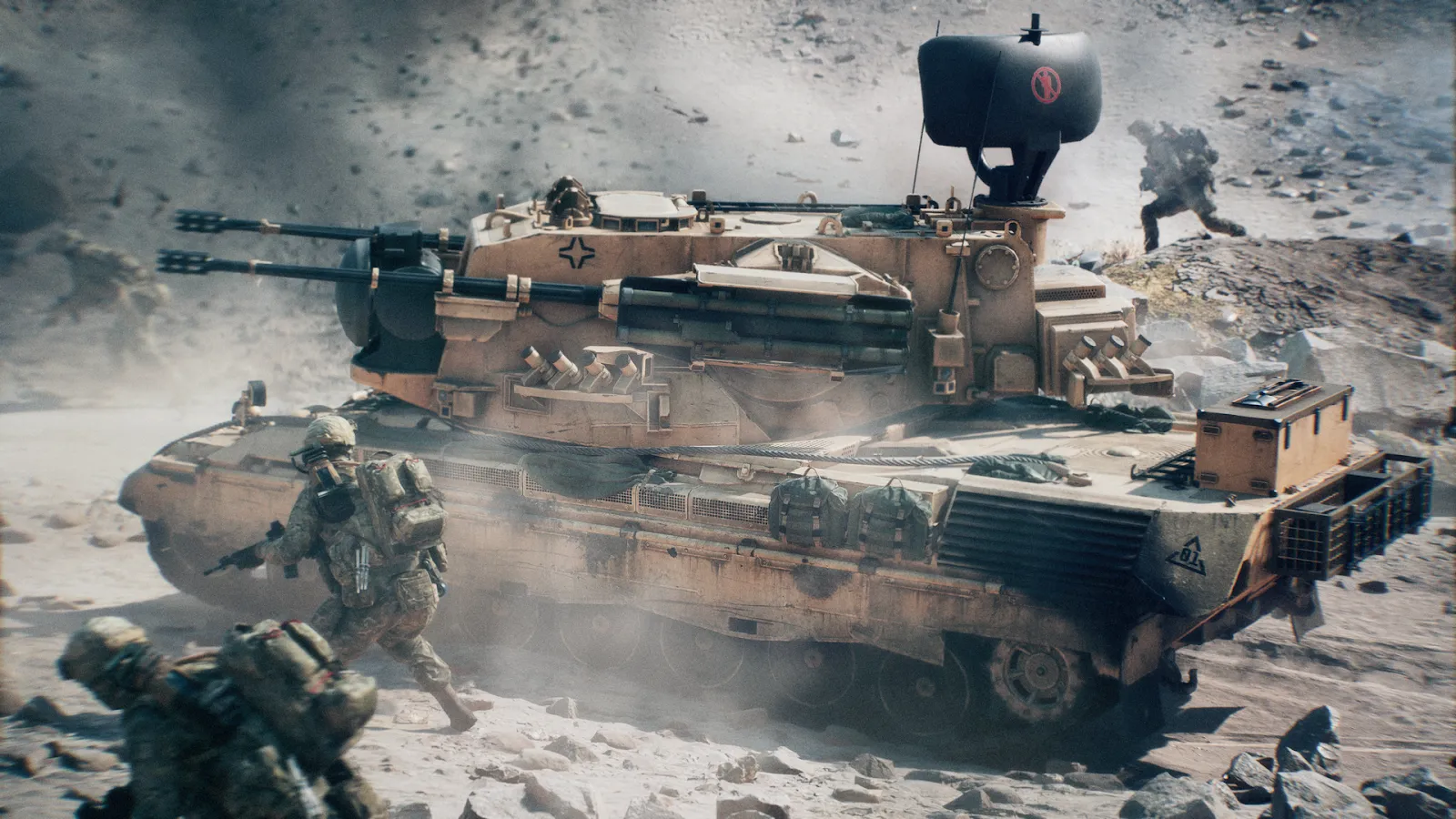
Season 5 made ground-based anti-air a real threat to jets and helicopters at range: faster shells, tighter spread and a quicker turret on the Mobile Anti-Air, while light rockets now need more hits to bring down a helicopter. If you man a Mobile Anti-Air or a stationary gun, fire in bursts at a target you can lead, watch the heat gauge, and do not waste shells on aircraft that are out of range. All numbers below come from update 2.1.1.0 (13 October 2026) and may change in later patches.
What anti-air options exist?
Three groups: vehicles such as the Mobile Anti-Air, stationary guns such as the GDF-009, and infantry tools such as lock-on launchers and laser designators (see the counter-aircraft guide). The Mobile Anti-Air carries three ammunition types, and the 2.1.1.0 notes changed all of them.
Why did DICE change anti-air?
The developer note says anti-air cannons were not effective enough at punishing aggressive fly-bys at mid to long range. The fix was to raise projectile velocity and cut shell dispersion, so ground-based anti-air gives more consistent results at longer distance. The same patch targeted light attack aircraft, in particular the Scout Helicopter, which the team felt was too effective against infantry with its rockets. Overall, the stated goal is anti-air that is more lethal and reliable, light aircraft that are less oppressive to infantry, and rewarding counters for both sides.
What changed for the Mobile Anti-Air?
- Maximum range is now about 800 m, slightly more than before.
- Base turret rotation speed is up 50%.
- First-person zoom magnification is higher.
- Projectile drag on all ammunition types dropped from 0.0025 to 0.0015.
Damage and handling by ammunition
| Ammunition | Jets | Helicopters | Infantry | Other changes |
|---|---|---|---|---|
| 35mm High Velocity | 32.5 to 62.5 | 26 to 45 | 13 to 25 | Velocity 1,175 to 1,250 m/s. Dispersion 0.25-0.85 to 0.5. Convergence distance 300 m to 90 m. Heat per shot 3.6% to 13%, cooling 0.5 to 0.833 per second, overheat penalty removed. |
| Multi-Purpose AA Shell | 65 to 85 | 65 to 61.2 | 13 to 34 | No burst mode. Velocity 850 to 1,175 m/s. Dispersion 0.7 to 0.4. Convergence 300 m to 115 m. |
| Anti-Armor AA Shell | 100 to 125 | 100 to 90 | 20 to 50 | Rate of fire 240 to 480 RPM. Magazine 8 to 4, reload 2.4 to 1.2 s. Velocity 560 to 900 m/s. Dispersion 0.6 to 0.3 degrees. Convergence 300 m to 150 m. |
| GDF-009 stationary cannon | 110 to 85 | 110 to 61.2 | 22-30 to 34 | Rate of fire 720 to 1,100 RPM. Dispersion 0.4 degrees. Heat per shot 4.2% to 8.4%, cooling 0.5 to 1 per second, overheat penalty removed. |
Read it as a direction of travel. Per-hit numbers tell only part of the story: shorter convergence distances and lower dispersion mean more of your shells land at range, and the lost overheat penalty means a hot gun no longer locks up for half a second. Against armoured vehicles the Anti-Armor and Multi-Purpose shells now deal slightly less (12 to 10 and 7.8 to 6.8 per hit), while light vehicles and quads take a lot more (62.5 and 250 per hit from the Anti-Armor shell). The GDF-009 lost most of its helicopter damage and is now best thought of as a general-purpose cannon with a high rate of fire.
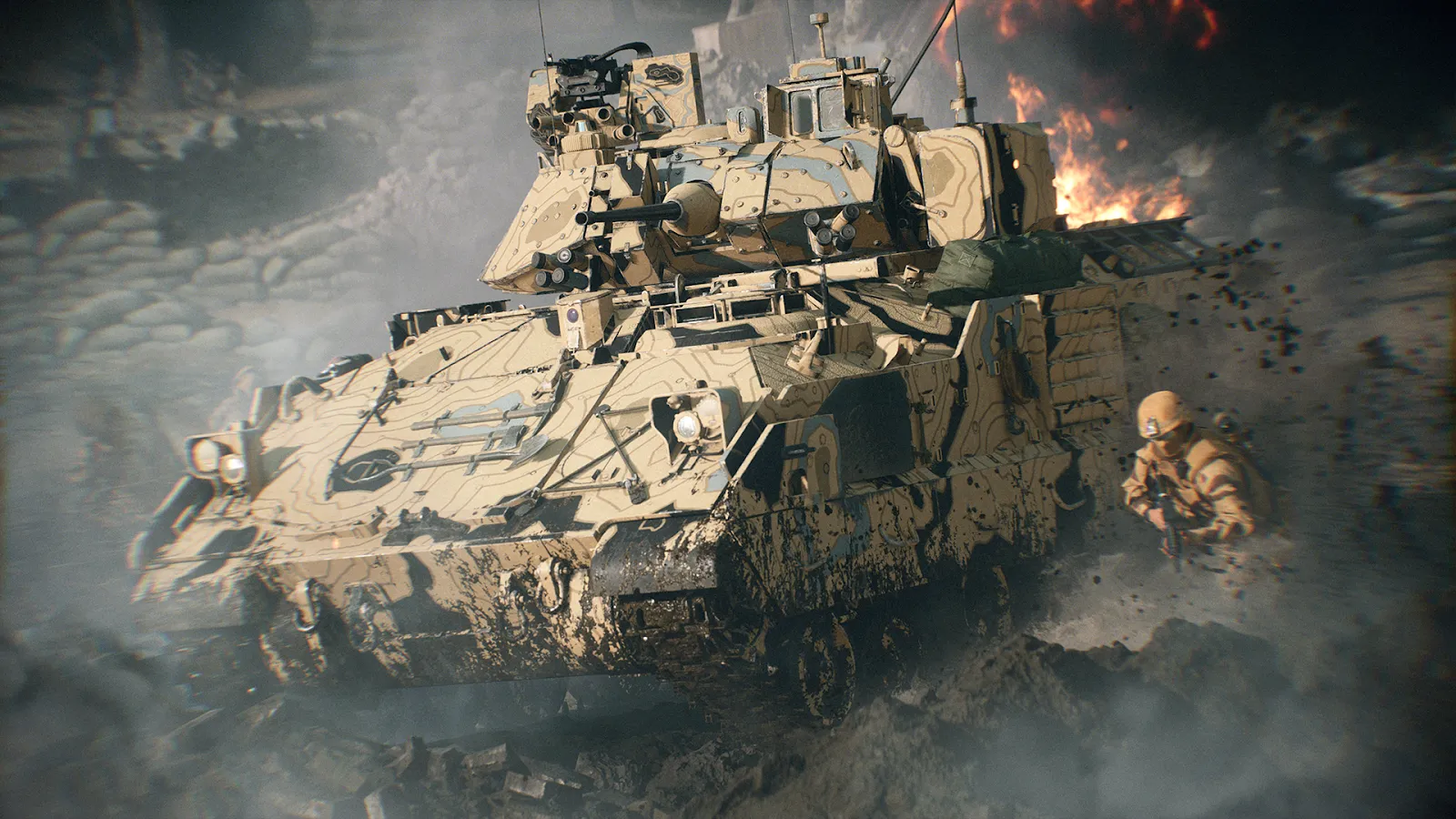
Armour changes in Season 5 also affect how long tanks and IFVs survive.
How do you use anti-air well?
- Find a position with cover. A stationary gun or a stopped vehicle is a target for the pilot and for ground armour.
- Fire in bursts. Heat per shot went up on both main guns while cooling improved, so short bursts keep you shooting longer than holding the trigger.
- Lead the target. With projectile speeds from about 900 to 1,250 m/s and less drag, a stable aim ahead of the aircraft hits more than chasing it.
- Pick the ammunition for the target. The Anti-Armor shell has the highest per-hit damage against jets (125) but a four-round magazine. The 35mm gun suits sustained fire at helicopters. The Multi-Purpose shell is the all-rounder with a much faster shell than before.
- Do not waste ammunition on out-of-range targets. The Mobile Anti-Air is tuned around roughly 800 m.
- Work with an Engineer. A launcher plus an AA vehicle forces a pilot to retreat; see the Engineer guide.
What changed for infantry anti-air?
The 2.1.1.0 notes cut the laser designation duration of the LTLM II laser designator from 9 to 2 seconds, and the preview post says the aim was to require users to track a target more consistently to keep a lock. The SLM-93A Spire air-defence launcher can no longer be fired without aiming down sights. A change that would make low-altitude aircraft more vulnerable to lock-on missiles was tested in Battlefield Labs and delayed for more iteration, so flying low is still the best answer to MANPADS for now.
What changed for the pilots?
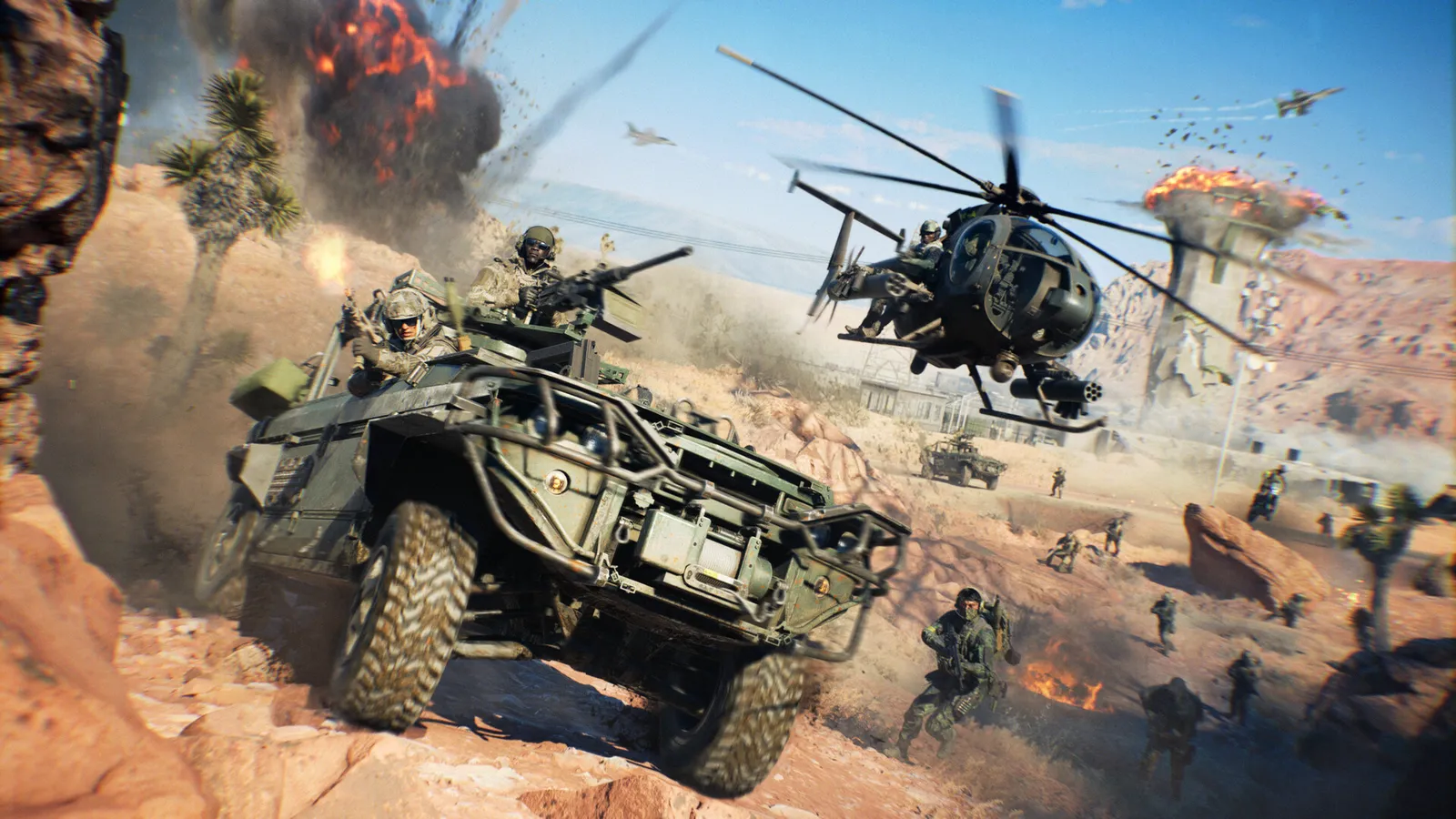
Pilots have to respect the air defence over open ground.
Light rockets need more hits to destroy a helicopter: Scout 4 to 7, Attack 5 to 9, Transport 11 to 15. The 70mm FFAR splash damage was reduced by 30% so it no longer one-hit kills infantry at common distances, and the Scout's rocket pod resupply rose from 28 to 38 seconds, which discourages carpet-bombing runs. Heavy Rotary MG damage to soldiers through helicopter glass dropped from 0.8x to 0.3x. If you fly, stay behind terrain and read our jet guide and pilot guide.
What about tanks and other vehicles?
Main Battle Tanks and IFVs now take 2.5 times damage from rear hits at 86 to 94 degrees, firing resets the 12-second regeneration delay, and going from critical to full health takes 8 seconds (up from 6.66 s for the tank and 7 s for the IFV). The RWS .50 cal machine gun got more penetration, a longer projectile lifetime (1.5 to 4 seconds), 450 RPM (up from 400) and less drag. See the tank guide.
After the Casino Heist update (10 November), the M142 MRAS rocket artillery vehicle replaces one Main Battle Tank at each HQ in Conquest on Area 51 and Operation Firestorm, joins each HQ on Mirak Valley, and on Railway to Golmud it replaces the Mobile Anti-Air at Objective B. That last swap matters for anti-air players: there is one fewer Mobile Anti-Air on that map's Conquest layout.
FAQ
Is Mobile Anti-Air good against jets now?
It is much better than before at mid to long range, mainly because of faster shells, tighter spread and quicker turret turning. It still needs cover and teammates, since the vehicle is a target itself.
Which Mobile Anti-Air ammunition is best against helicopters?
By per-hit numbers the Anti-Armor shell does 90 and the 35mm does 45, but the 35mm fires much faster and cools faster than before. Try both on the same helicopter before choosing.
Why does my gun overheat?
The 35mm gun now produces 13% heat per shot (up from 3.6%) and the GDF-009 8.4% (up from 4.2%). Cooling is faster and the overheat penalty is gone, so short bursts work better than holding fire.
Quick tips
- Pick AA when jets are controlling the match; otherwise an Engineer with a launcher is more flexible.
- Switch position after a few kills; pilots remember where fire came from.
- Check patch notes each season; vehicle numbers move often.