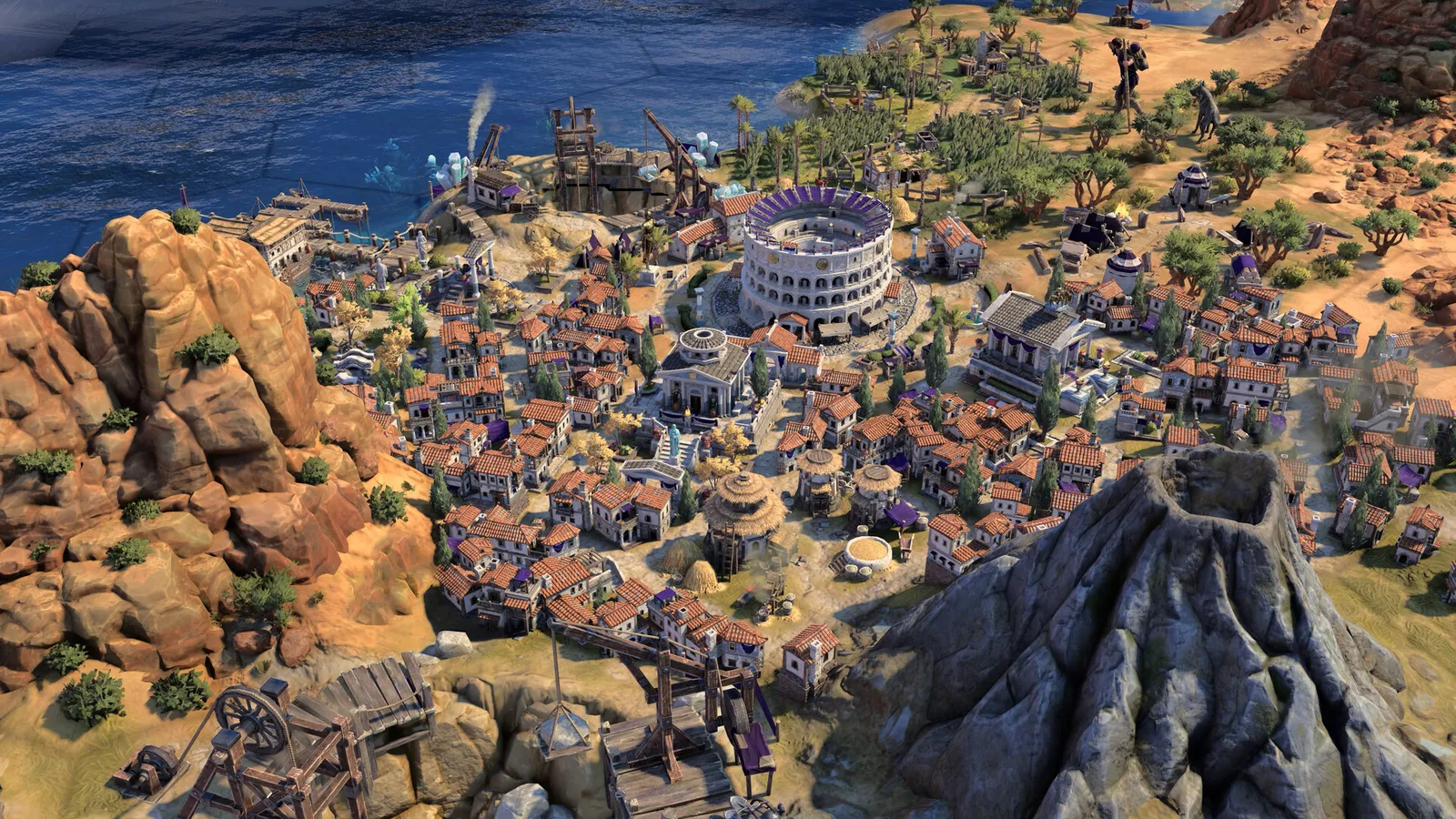
In Civilization 7 every new settlement starts as a town, and only your capital begins as a city. Towns are cheap to run and grow on their own, while cities can build every unit, building and wonder. Convert a town into a city when you want it to produce things; leave it a town when you just want it to feed the rest of your empire. This guide is current as of update 1.5.1 (November 2026).
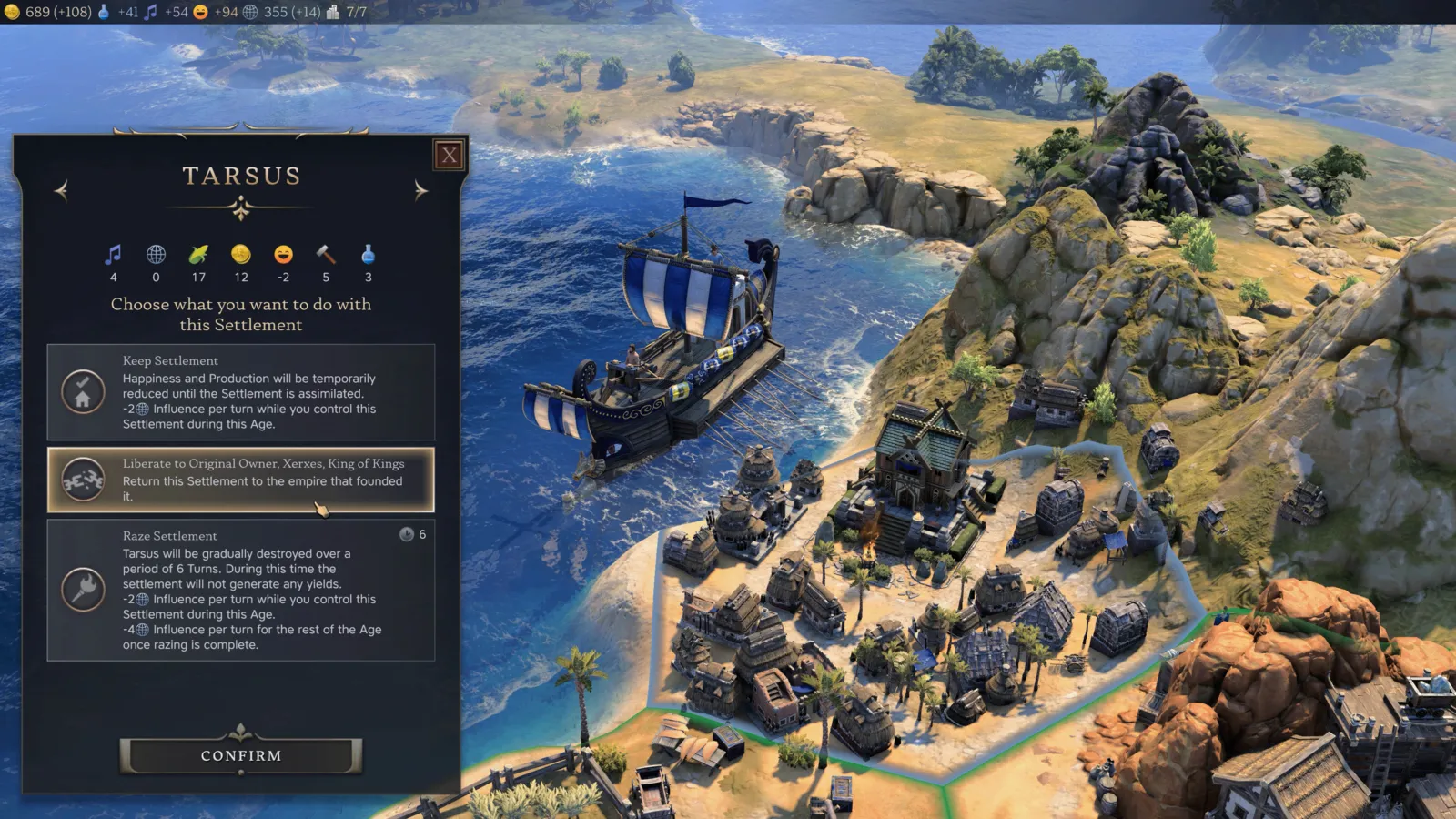
The settlement panel shows what a new settlement can do.
What is the difference between a town and a city?
| Town | City | |
|---|---|---|
| How you get it | Found a settlement or capture one | Convert a town (the capital is always a city) |
| What it builds | Cannot construct buildings or wonders. You buy buildings with gold | All units, buildings and wonders |
| Production | Production it generates is turned into gold | Production goes into a build queue |
| Specialists | No | Yes |
| Counts toward settlement limit | Yes | Yes |
The settlement limit is a soft cap. Go over it and you take a happiness penalty across your empire, so spreading wide has a cost. Some leaders and civics raise the limit. Governments and Celebrations were reworked in update 1.4.1, and a Celebration now lasts 6 turns on Standard speed instead of 10 and is slightly harder to earn, so a very wide empire needs a plan for happiness.
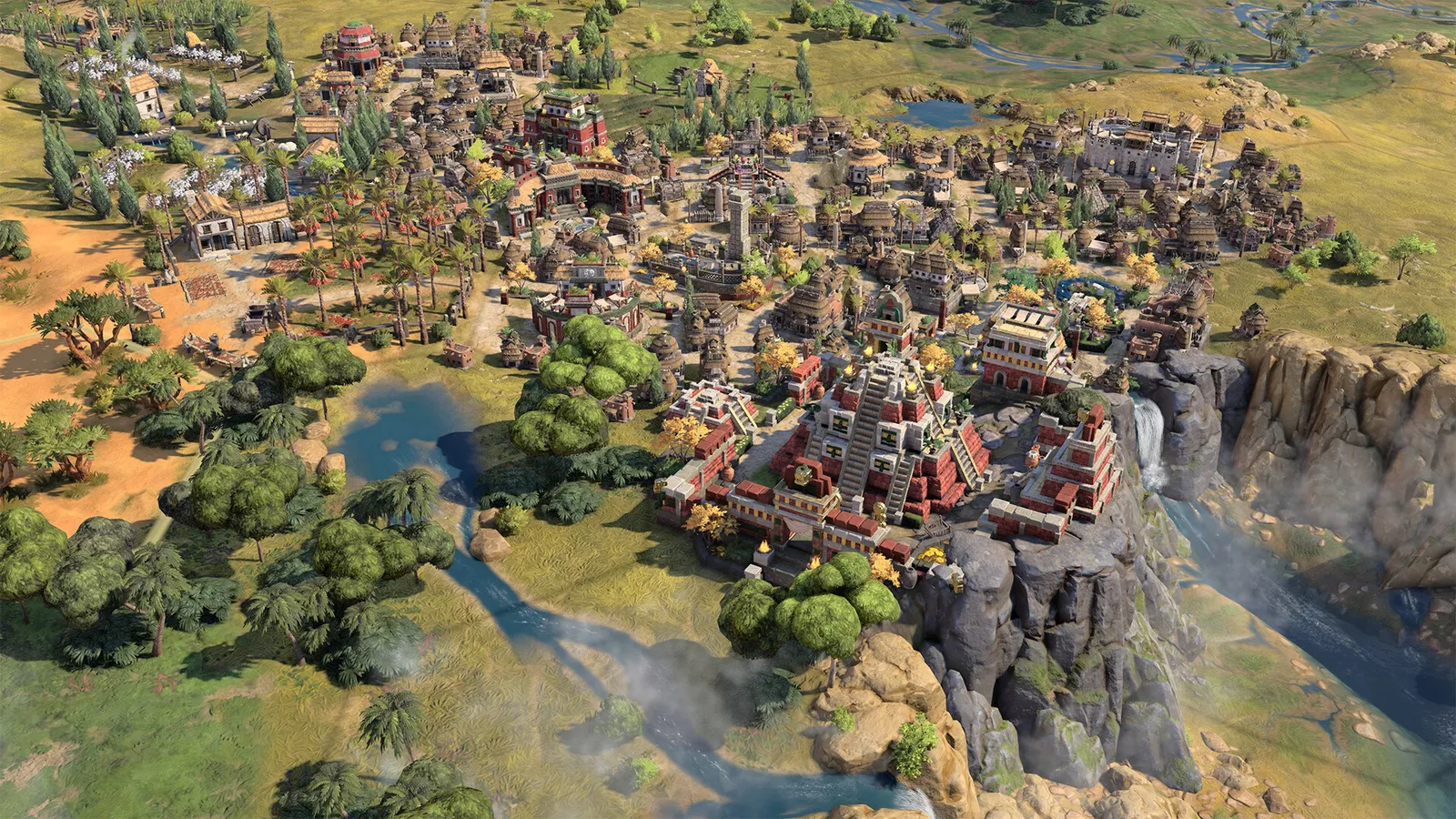
Cities build everything, towns mostly buy it.
When should you convert a town into a city?
- When the town has a good tile set to work and you want it to build wonders, units or districts.
- When its production is worth spending directly instead of buying buildings with gold.
- When you can afford it: the price depends on how many cities you already own.
The conversion cost in the Antiquity Age starts at 400 gold, adds 300 for each city you already own, and drops by 50 for every point of population, with a minimum of 200 and a maximum of 1,000. Later Ages use higher base and per-city costs. A town you captured from another player costs twice as much. In practice this means a bigger town is cheaper to convert and your fifth city costs much more than your second, so decide which towns will become cities early and let them grow first. Keep most of your small, low-production settlements as towns, especially while you expand.
What are town specializations?
A town grows by default (the Growing Town focus gives +50% growth). Once it reaches population 7 you can choose a specialization instead. It lasts for the rest of the Age, and afterwards the town can only switch between Growing Town and its chosen specialization. Community guides and the game data agree on the list below; bonuses scale with the Age, so read the in-game tooltip for the exact numbers.
| Specialization | What it is for | Notes |
|---|---|---|
| Growing Town | The default; +50% growth rate | Good while the town is small |
| Farming / Fishing Town | Extra Food on farms, pastures, plantations and fishing boats | Also lets you buy extra Water and Food buildings |
| Mining Town | Extra Production on camps, woodcutters, clay pits, mines and quarries | A strong default when nothing else fits |
| Urban Center | Culture and Science on Quarters | Lets you buy more Science and Culture buildings |
| Resort Town | Happiness and Gold on Appealing tiles; bonus yields on Natural Wonder tiles | Lets you buy Happiness buildings |
| Fort Town | Unit healing and fortification health | For borders with aggressive neighbours |
| Trade Outpost | Happiness on Resource tiles and longer trade range | Availability by Age differs between sources |
| Religious Site | Happiness on buildings and extra Relic slots on Temples | Exploration Age |
| Hub Town | Influence for every connected settlement | Exploration and Modern; limited to one per continent |
| Factory Town | Discount on purchasing a Factory, Port or Rail Station | Modern Age |
A focused town stops growing and sends its accumulated Food to connected cities instead, which usually pays off, especially in later Ages. Since update 1.5.0 towns can purchase Fortification buildings regardless of their focus.
How long should a town grow before you specialize?
- Antiquity: build the foundation. It is fine to let towns grow for most of the Age.
- Exploration: the busiest period for specializing. A common rule is to let a new town grow until the next population point would take about 10 turns or more.
- Modern: specialize almost immediately, because there is too little time left for growth to pay back.
Mining and Urban towns can grow for a while; they benefit from working more tiles. A Hub Town needs almost no growth, since its Influence does not depend on population.
What do growth events give you?
When a settlement reaches enough population a Growth Event lets you improve a tile, create a specialist in larger cities, or expand its borders. Spend them on tiles that feed your most important buildings.
Leaders and towns
Augustus is built around towns: the capital gets +2 Production for every town, he can buy culture buildings in towns whatever their focus, and since update 1.4.0 he gets 15% Gold toward buying buildings in towns, doubled to 30% in the capital (it used to be 50%). Several leaders can buy Tier 1 Science and Culture buildings in towns. See the beginner leaders guide.
Quick tips
- Make a settlement a city only if it will do real work for you.
- A town can switch from a specialization back to growth for the same Age, so specialize, buy the building you want, then switch back.
- Towns you incorporate from Independent Powers also count toward the settlement limit.
- A specialization is a commitment for the Age, so decide with the next Age transition in mind (see ages explained).
FAQ
Can a town build wonders?
No. Only cities can, which is the main reason to convert one.
At what population can a town specialize?
Population 7, per current guides. The in-game tooltip is the final word.