Hunt: Showdown 1896 rates every player with a hidden MMR (matchmaking rating) number, and the 1 to 6 star icon on your hunter card is just a simplified view of that number. MMR only moves when you kill or get killed by another player, and the size of the change depends on the MMR gap between you and the other hunter.
What changes your MMR
Only player kills and player deaths affect MMR. Killing an AI boss, drowning, dying to fall damage, team kills, or simply extracting without a fight do not move the number. When you kill another hunter, your MMR goes up, and when another hunter kills you, it goes down.
The size of the swing depends on the MMR difference between the two players:
- Kill someone with a similar MMR to yours: a small gain.
- Kill someone with a higher MMR than yours: a larger gain.
- Kill someone with a lower MMR than yours: a smaller gain.
- Die to someone with a higher MMR than yours: a smaller loss.
- Die to someone with a lower MMR than yours: a larger loss.
This is the same principle behind chess rating systems: beating a stronger opponent is worth more than beating a weaker one, and losing to a weaker opponent costs more than losing to a stronger one.
The confidence variable
Since the 1896 relaunch, the developer has described the system as a modified version of OpenSkill rather than a plain chess-style formula. On top of the kill and death math, the system tracks a confidence value for each player that adjusts over time. When you are new, or the system has little data on you, your MMR swings harder after every match. Once the system has watched hundreds of your games, it becomes more confident about where you belong, and your rating moves in smaller steps, so a rough night or a hot streak has less effect than it did early on.
Why your stars lag behind your last match
Your star rating is calculated from your MMR going into the last match, not the one you just finished. If you check your profile right after a round, the number does not yet reflect that round's kills and deaths; it updates before your next match loads. That is why a player can die five times in a row and still see the same star rating for a game or two before it drops.
Team MMR and matchmaking
Your personal MMR is not the only number that decides who you play against. The game also calculates a team MMR for your squad, which factors in your team composition. Going in as a random trio, a random duo, or solo changes how your personal MMR is weighted compared to a premade team, and the matchmaker tries to pair your team MMR against a similar team MMR, within roughly one star of margin.
Region population matters here too. On full servers, more star brackets exist and matches stay close in skill. On quieter servers, the brackets widen and full matches get prioritized over a tight MMR fit, which is why a 4-star player in a smaller region sometimes runs into 6-star hunters.
What this means for your playstyle
Because MMR only reacts to kills and deaths, the fastest way to climb is consistency rather than chasing a single big fight. A player who wins most of their fights against similarly rated hunters gains slowly but steadily, while a player who hunts for a single kill on a much higher rated target and then dies repeatedly trying will lose MMR faster than they gain it. If your goal is to stay in a lower, more relaxed bracket, avoid farming kills against clearly weaker players; a long streak of one sided wins will push your MMR, and therefore your matchmaking, upward even if you never notice the climb match to match.
Team composition choices also have a real effect on who you face. Queuing solo or in a random duo puts more weight on matching a tight team MMR, which for a strong solo player can mean facing higher rated opposition than their own personal MMR would suggest. Queuing as a premade trio with friends of mixed skill averages things out differently, since the team MMR reflects the whole squad rather than one person's number alone.
FAQ
Does playtime or prestige affect MMR?
No. Hours played, bloodline rank, and prestige level are not part of the MMR calculation. Only kills and deaths against other players count.
Can I lose MMR without dying?
Not under normal play. MMR only changes from player kills and player deaths, so quitting a match early or extracting without a fight leaves your rating unchanged.
Why do some 6-star hunters feel weaker than some 5-star hunters?
Star brackets cover a range of MMR, not a single value, so two players can share a star rating while sitting far apart within that range. A player near the bottom of the 6-star range can feel weaker than one near the top of 5-star.
How do I check my exact MMR?
The game does not show a raw MMR number in the menus. Your star icon and the team MMR indicator next to it are the only in-game references, and comparing the two tells you roughly where you sit within your current bracket.
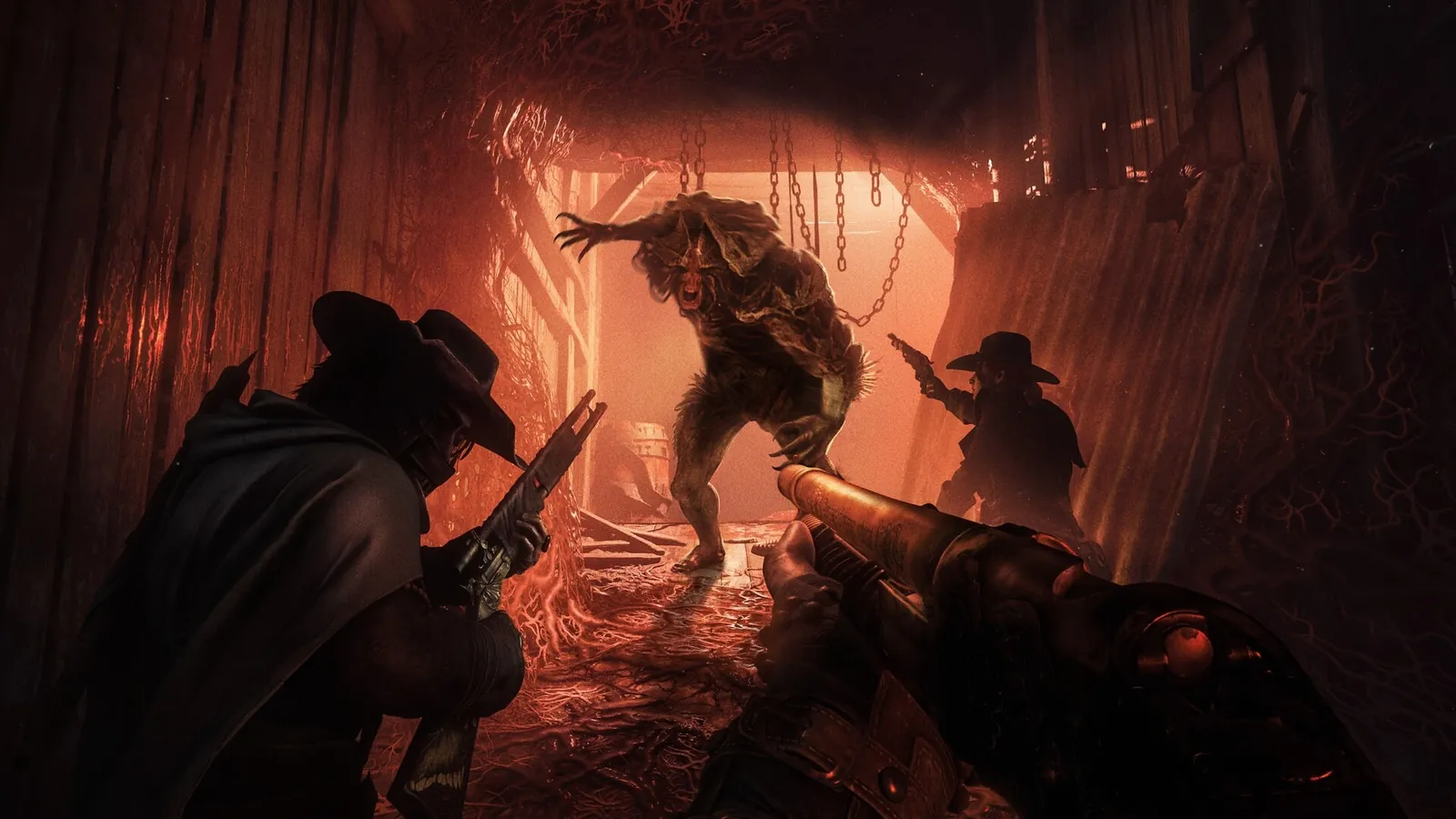
Fights against bosses and AI never affect MMR; only hunter-versus-hunter kills do.
For more on getting into your first matches, see the Hunt: Showdown 1896 game page, and check how to get more FPS in Hunt: Showdown 1896 if frame drops are costing you fights.