Skip to content
Set up my rig
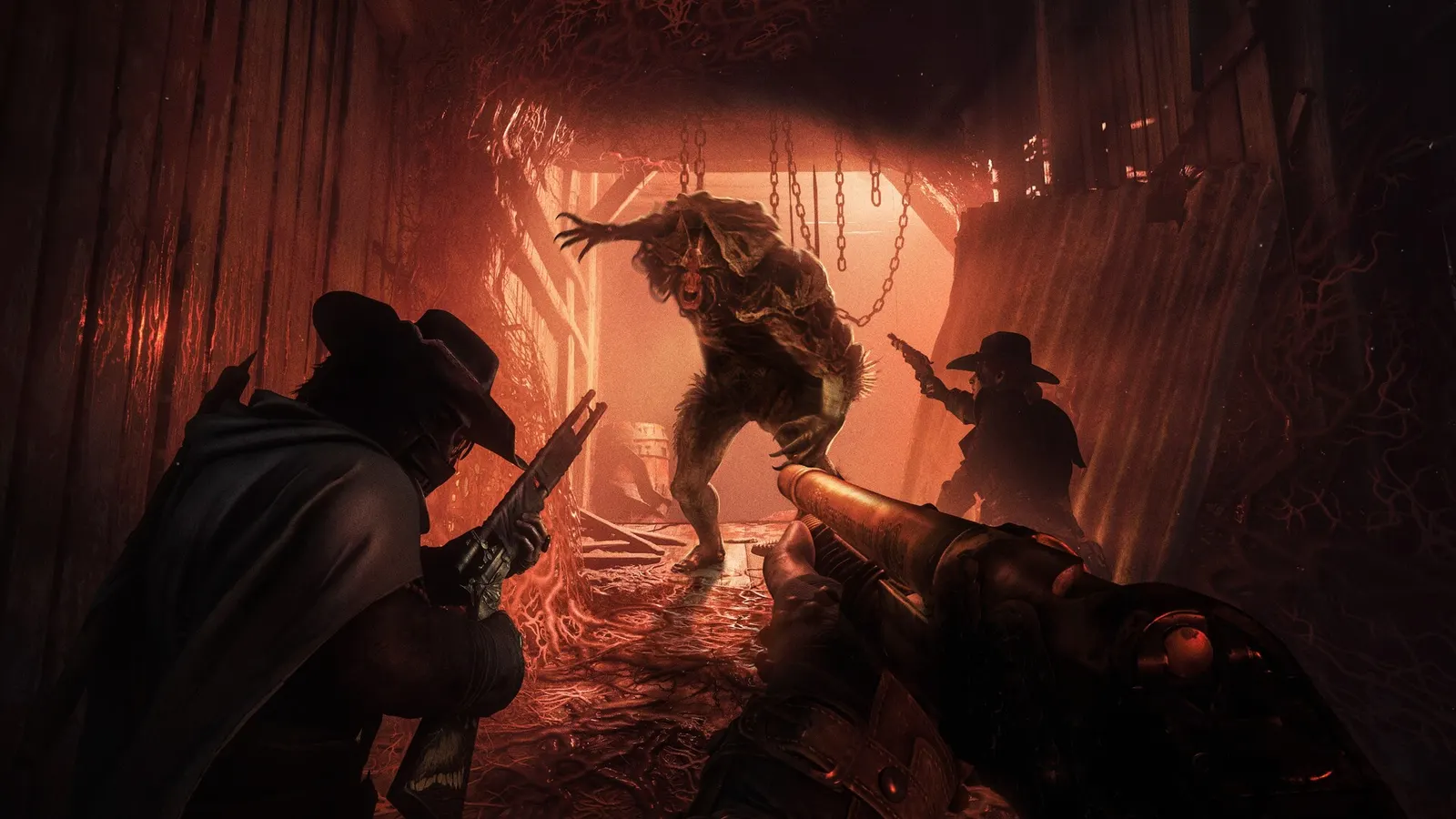
Hunt: Showdown 1896, official artwork

Hunt: Showdown 1896 FPS boost and stutter fix

The biggest frame costs in Hunt: Showdown 1896 are Global Graphics Quality, Shadow Quality, View Distance Ratio. Start there, then work through the stutter checklist.

Updated . Game data researched November 2026.

  • PEGI 18
  • Competitive
Genre
Extraction shooter
Developer
Crytek
Released
2019
Platforms
PC, Xbox, PlayStation

Which Hunt: Showdown 1896 settings cost the most FPS?

Global Graphics Quality

A starting preset; guides then switch to Custom. Ultra costs a lot against High.

Low

Shadow Quality

One of the costlier options; guides use Medium on low-end PCs and High on strong ones. Medium also keeps dark corners readable.

Medium

View Distance Ratio

Matters more at higher resolutions; High helps you spot distant hunters.

High

Object Quality

Detail of buildings and props.

Medium

Lighting Quality

Guides use Low on weak PCs and Medium on strong ones.

Low

Global Illumination

Indirect lighting; a notable cost for a subtle gain.

Low

Effect Quality

Explosion, fire and smoke effects.

Low

View Distance Vegetation

Foliage distance; guides lower it first when the GPU is the limit.

Low

Values shown are what we pick for max FPS (visibility kept where it matters). Section names follow the in-game menu.

Upscaling and latency in Hunt: Showdown

  • Upscaling: NVIDIA DLSS, AMD FSR, Intel XeSS. Use the Quality mode first; at 1080p avoid Balanced and Performance, they get blurry.
  • Frame generation: not available in this game.
  • Latency: NVIDIA Reflex. Turn it on; it lowers input lag with no image cost.

Upscaling explained

How do I fix stuttering in Hunt: Showdown 1896?

Hunt: Showdown: AI-heavy maps are CPU-bound

  1. In Hunt: Showdown, guides report the game is heavily CPU-bound at high frame rates on maps with dense AI spawns, so a faster processor and XMP/EXPO memory help more than lower presets.
  2. In Hunt: Showdown, close browsers and launchers while playing.

Hunt: Showdown: Video RAM usage target

  1. In Hunt: Showdown, A guide sets the Video RAM Usage Target to about 90% and raises it when you have more than 6 GB of VRAM.
  2. In Hunt: Showdown, if textures pop in, lower Texture Quality one step instead of raising the target.

Hunt: Showdown: SSD and drivers

  1. In Hunt: Showdown, install on an SSD (recommended on the Steam page) and keep the GPU driver current; old drivers cause shader stutter in the first match.

Checklist for every PC

  • Install the game on an SSD: a hard drive causes texture pop-in and hitches. Hunt: Showdown 1896 wants 12 GB of RAM; close browsers and launchers while playing.
  • Lower Textures one step if your graphics card has 8 GB of VRAM or less and you see sudden drops.
  • Let shaders finish compiling on first launch and after driver updates; the first match can stutter.
  • Enable XMP/EXPO so your RAM runs at its rated speed, and update your graphics driver.
  • Check that Windows runs your monitor at its full refresh rate: how to check.
  • Turn on Game Mode and Hardware-accelerated GPU scheduling: Windows gaming settings.

Hunt: Showdown 1896 settings for a low-end PC

SettingLow-end value
ResolutionYour monitor's native resolution; scale with the upscaler instead
Window ModeFullscreen
Super ResolutionNative; DLSS Quality on RTX, FSR Quality on AMD and older GeForce, XeSS on Intel Arc
NVIDIA ReflexOn with NVIDIA Reflex on GeForce
V-SyncOff; use G-Sync or FreeSync with an FPS cap instead
Max FPS3 below your refresh rate (141 on 144 Hz); uncapped for max FPS
Global Graphics QualityLow
Object QualityMedium
Texture QualityMedium
Lighting QualityLow
Global IlluminationLow
Shadow QualityMedium
Effect QualityLow
Post-Process QualityLow
View Distance RatioLow
View Distance VegetationLow
GPU TessellationOff
Motion BlurOff
Near Depth of FieldOff
HDROff