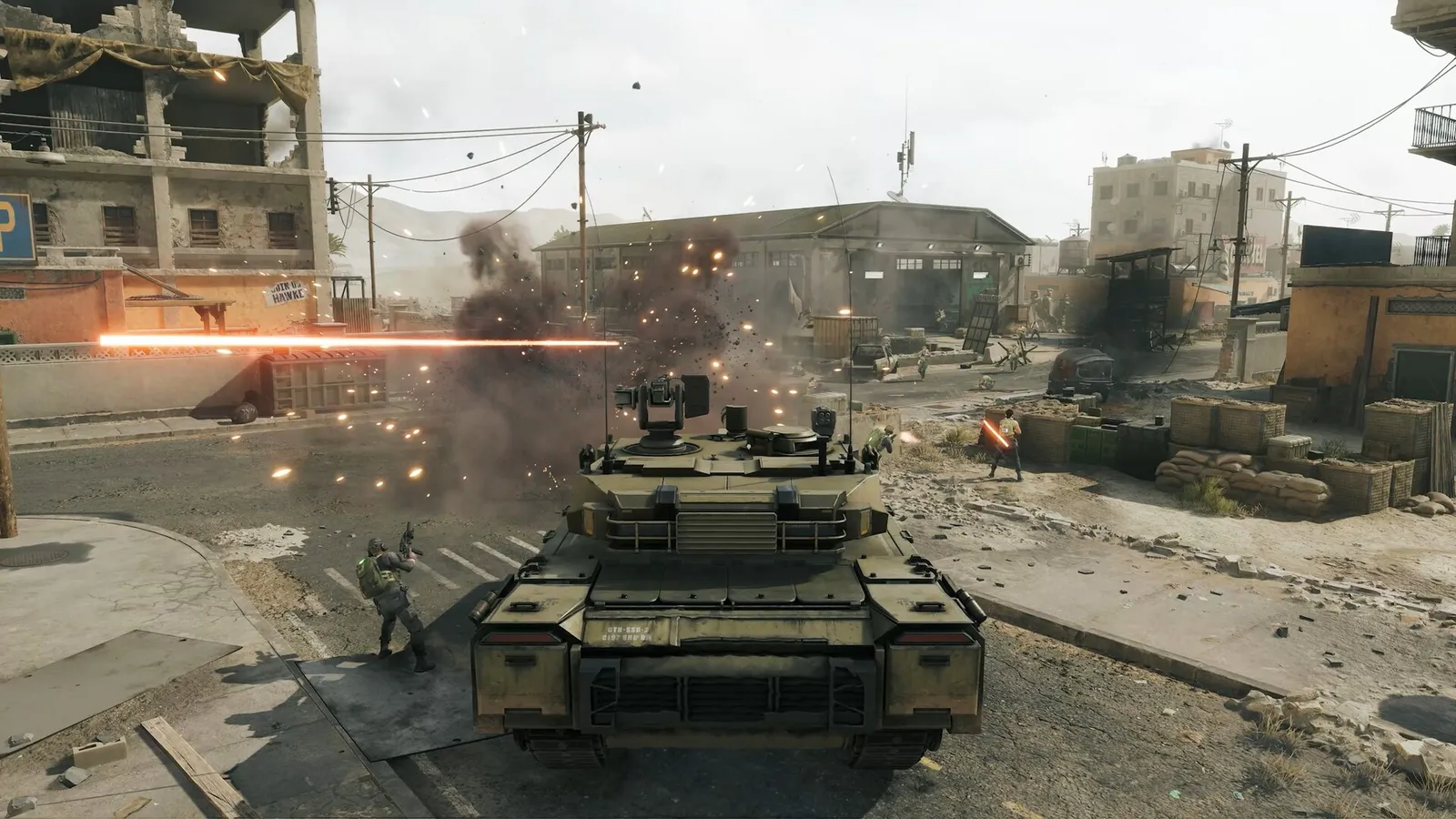
Updated for Season 12 "Aurora", 10 November 2026. Vehicle costs and stats change with balance patches.
Vehicles decide most large Warfare matches in Delta Force. The basic rule for beginners is to treat a vehicle as a team asset: ride as a passenger first, stay with your squad, and switch to an Engineer when the enemy has more armour than your team can handle.
What is on the battlefield
- Tanks and wheeled tank destroyers: heavy firepower against vehicles and fortifications. Wheeled tank destroyers keep fairly high speed even after the engine is destroyed (Season 12).
- Anti-air vehicles: the LAV-AA is the standard answer to helicopters. Its position on some maps, such as the Cyclone defender spawn, changes between seasons.
- Guided-missile vehicles: the LAV-G1 fires guided missiles, and in Season 12 its lock-on area was narrowed. The UCB-95 wire-guided missile now flies slower, and TV-guided missiles can be intercepted mid-flight.
- Amphibious LSV: added in Season 11 in Assault, Mortar and Rocket Launcher variants. The Mortar and Rocket Launcher versions are unlocked with points mid-match. In Season 12 the variant modification cost dropped from 5,000 to 4,000 points, and the Mortar and Rocket Launcher modification and ammo resupply each cost 500 less. The flamethrower heats and cools faster.
- Helicopters: the UH-60 Black Hawk supports The Mog, and the CSV-35 tiltrotor transport helicopter with customisable weapons arrived in Season 10 on several maps. Transport helicopter pilot assist points were raised to 120 in Season 12.
- Boats and jet skis: used on watery maps, and Zenith Port makes amphibious vehicles and boats move with the waves.
- Fixed weapons: Vulcan Cannons and Coastal Artillery. In Free Build mode you can place a Vulcan Cannon, and the bases of Coastal Artillery, anti-air and Vulcan positions can be destroyed.
Countering vehicles
- Engineers are the answer to armour. Operators such as Shepherd, Uluru and N-Two are built around damaging and disabling vehicles, and N-Two's freeze gadget can hack an enemy vehicle, which now shows a chat notification.
- Rocket and missile launchers work best from cover. Community guides recommend a Javelin or rocket launcher against tanks.
- Helicopters can be hit by a tracking launcher in range or shot down by map anti-air guns, according to community guides.
- Tactical disruption: since Season 12, disrupting a vehicle with tactical gear shows a score notification, grants an assist if the vehicle dies and warns your team.
Driving and flying tips
- Never drive alone into the objective. A vehicle without infantry support is easy prey for one engineer.
- Keep moving. Standing still to fire is how tanks die.
- Use the second seat. A gunner who covers your flank doubles your usefulness.
- Retreat to repair. Engineers can repair friendly vehicles, and a repaired vehicle is cheaper than a lost one.
- Vehicle airdrops: spending points can add an effect, currently temporary active defence on some vehicles.
In Victory Unite
The Commander has to approve vehicle deployment, with exceptions for top players. A good vehicle player should talk to the Commander before spawning an expensive asset, and a new Commander should save the best vehicles for the objective that needs them most.
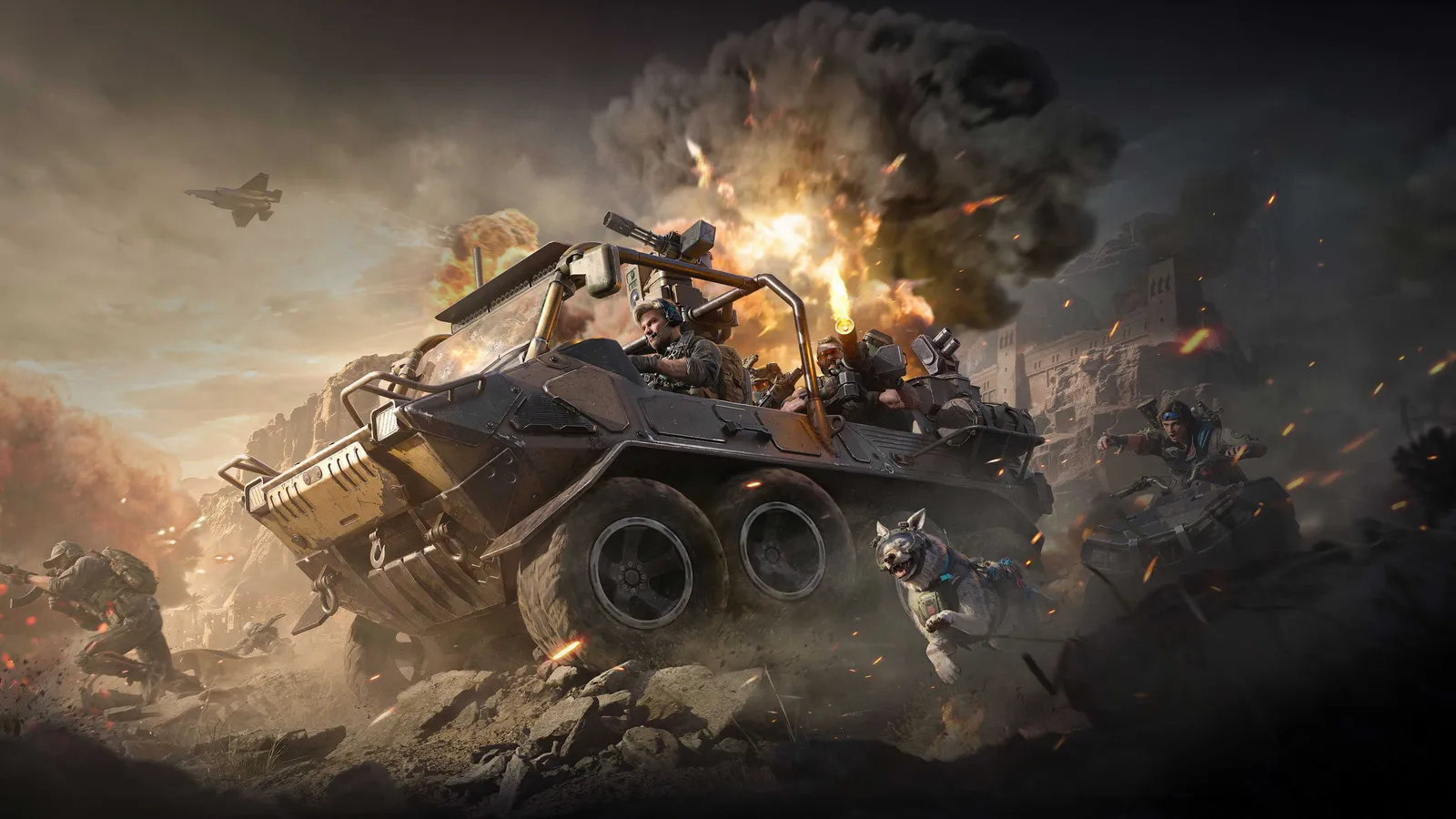
Armoured vehicles are strong, but not untouchable.
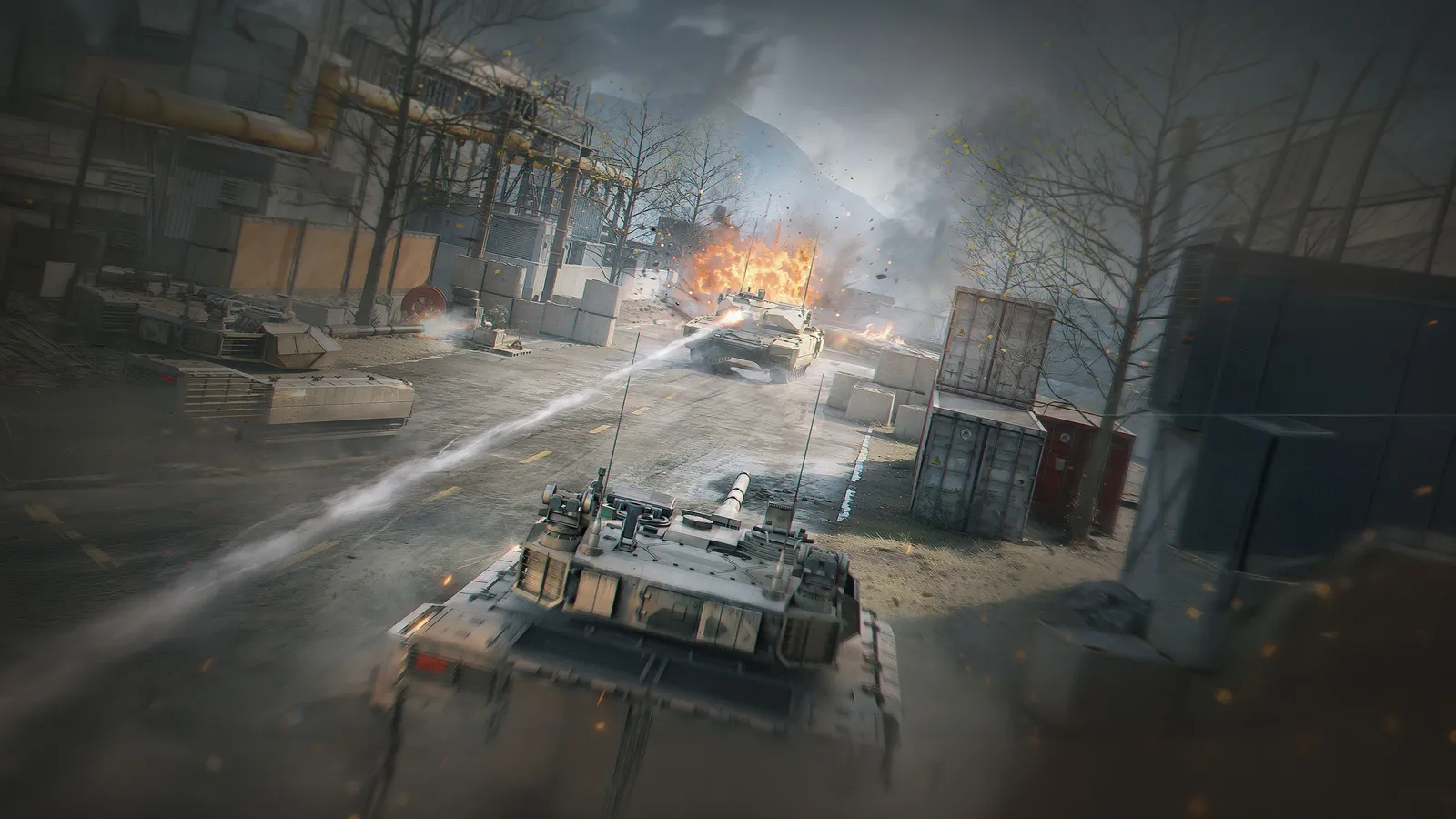
Tanks dominate open lanes, so know where they can be flanked.
Frequently asked questions
How do I get a vehicle?
Some are available at spawn points, others are called in with the points you earn during the match, and some depend on objectives. The in-game menu shows what is available.
What is the best vehicle for a beginner?
A passenger seat in a transport. Learn the map first, then drive.
Quick tips
- Pick Engineer when more than two enemy tanks are active.
- Look up as well as ahead: helicopters and call-in strikes are easy to miss.
- Low frame rate hurts targeting at range, so read how to get more FPS and less lag.