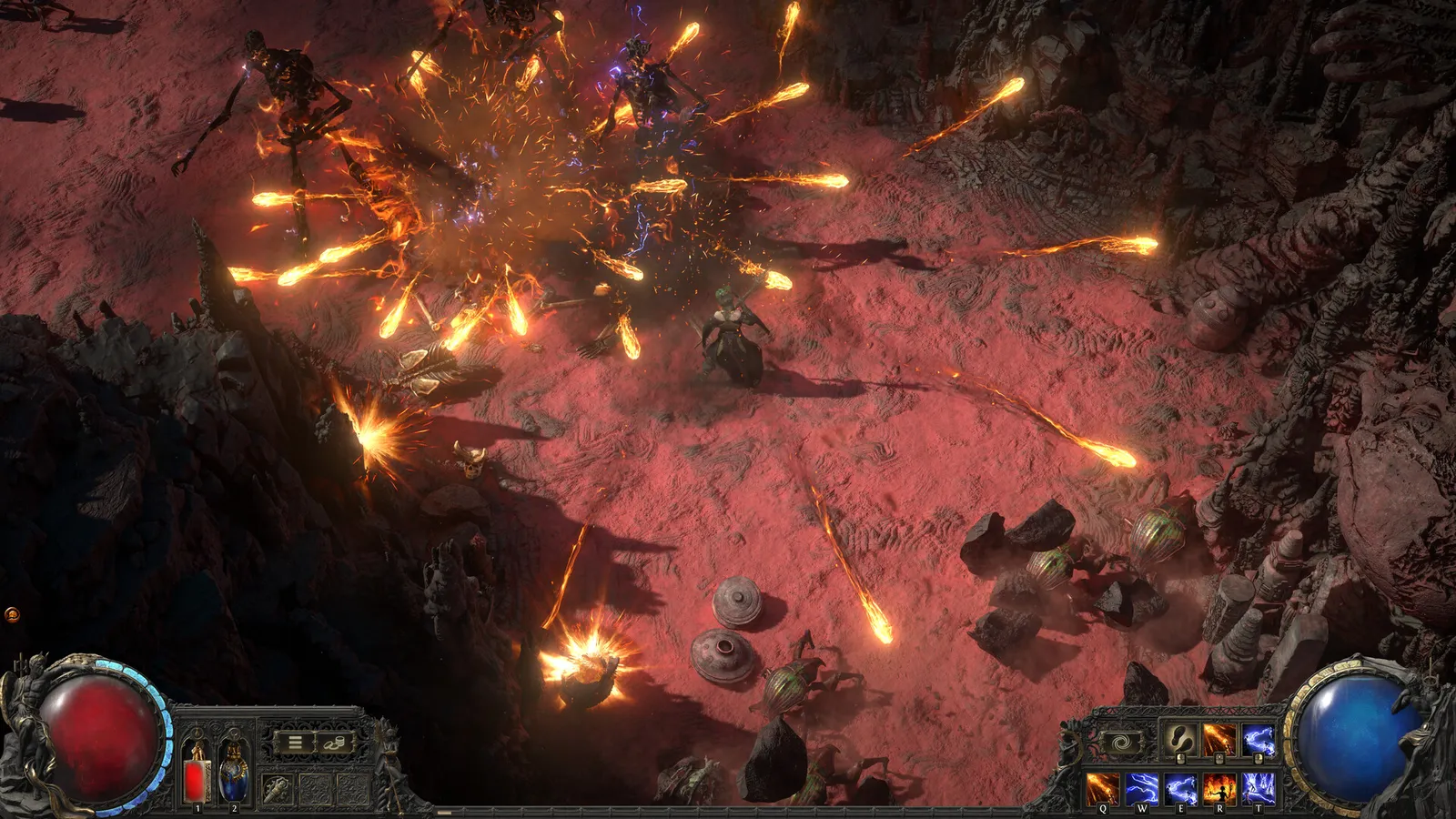
Runes in Path of Exile 2 are small socketable items that add a bonus to a piece of gear. The bonus depends on the slot: the same rune does one thing in a martial weapon, another in a wand or staff and another in armour. A socketed rune cannot be taken out again. You can only overwrite it with another rune or Soul Core, and the old one is destroyed. Details are as of the 0.5 series in November 2026 and may change at the 1.0 launch.
What is a rune and what are the tiers?
A rune is a stackable augment that you place into an empty augment socket on an item. Runes drop from any enemy and are also quest rewards. Each rune family comes in tiers: Lesser, the standard rune, Greater and, since 0.5, Perfect. Higher tiers give bigger values and need a higher character level: the standard rune needs level 15, the Greater rune level 30 and the Perfect rune level 50, while the Lesser rune has no listed requirement. Soul Cores, which come from Trials of Chaos, are a separate kind of socketable with stronger and more unusual effects.
Most items hold one or two sockets. An Artificer's Orb adds one more if the item can take it, and you can make one from ten Artificer's Shards.
What do the elemental runes do?
These three scale by tier. On armour they give a flat resistance, which is the cheap way to fix a hole in your resistances.
| Rune and tier | Martial weapon | Wand or staff | Armour |
|---|---|---|---|
| Desert, Lesser / standard / Greater / Perfect | Adds 4-6 / 7-11 / 13-16 / 17-20 fire | 6 / 8 / 10 / 12% of damage as extra fire | +10 / 14 / 18 / 22% fire resistance |
| Glacial | Adds 3-5 / 6-10 / 9-15 / 16-20 cold | 6 / 8 / 10 / 12% as extra cold | +10 / 14 / 18 / 22% cold resistance |
| Storm | Adds 1-10 / 1-20 / 1-30 / 1-40 lightning | 6 / 8 / 10 / 12% as extra lightning | +10 / 14 / 18 / 22% lightning resistance |
What do the other runes do?
Standard-tier values, level 15. Greater and Perfect add a few points per tier.
| Rune | Martial weapon | Wand or staff | Armour |
|---|---|---|---|
| Iron | 16% increased physical damage | 25% increased spell damage | 16% increased armour, evasion and energy shield |
| Body | Leeches 4% of physical damage as life | +40 maximum energy shield | +45 maximum life |
| Mind | Leeches 3% of physical damage as mana | +60 maximum mana | +30 maximum mana |
| Rebirth | Gain 25 life per enemy killed | 8% increased energy shield recharge rate | Regenerate 0.4% of maximum life per second |
| Inspiration | Gain 20 mana per enemy killed | 25% increased mana regeneration rate | 15% increased mana regeneration rate |
| Stone | 30% increased stun buildup | Stun threshold equal to 12% of maximum energy shield | +75 stun threshold |
| Vision | +90 accuracy | 20% increased spell critical hit chance | 12% increased flask recovery |
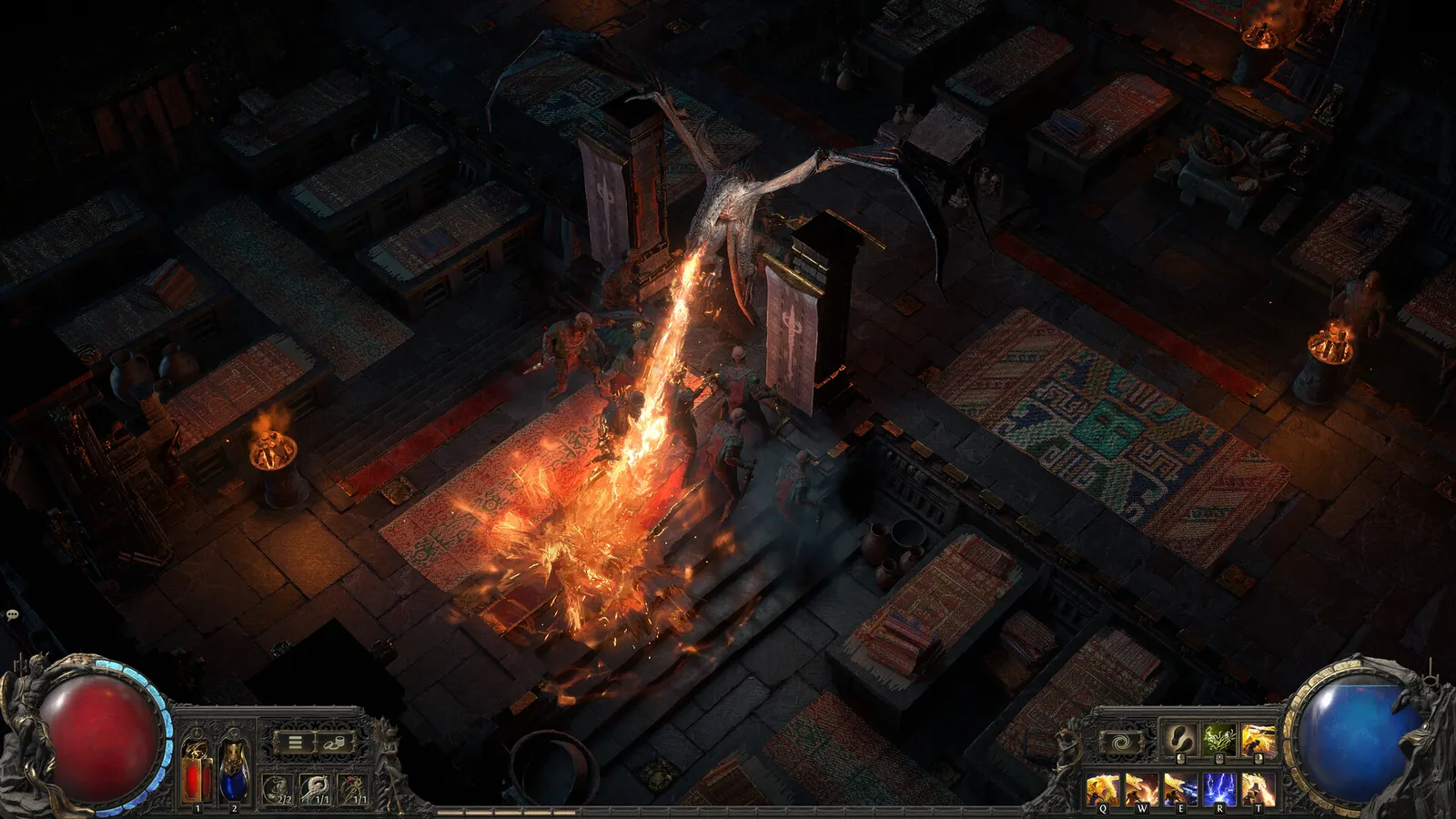
Elemental runes add flat damage or extra damage, or resistance on armour.
There are also the attribute runes Robust (strength), Adept (dexterity) and Resolve (intelligence), which work on any equipment and give +6, +9, +12 or +15 of their attribute by tier, and the Tempered rune for physical damage on weapons. Check the item tooltip for exact values: the numbers here show the pattern rather than a build.
Which runes should you use?
- Armour: fix resistances first. A Desert, Glacial or Storm rune is a cheap way to cap an element you are short on. After that, a Body rune is the life choice.
- Martial weapons: Iron suits physical builds, and the elemental runes suit elemental ones.
- Wands and staves: use the elemental rune that matches your spell, Iron for general spell damage, or Inspiration if you need mana.
- Life or mana short: Body in armour, Mind or Inspiration.
Early in the campaign cheap runes are enough. Save the high tiers for gear you plan to keep.
How do you socket a rune?
- Pick up the rune and put it onto an item with an empty augment socket.
- Confirm the socket if the game asks.
Can you remove a rune?
No. Once a rune, Soul Core or talisman is inserted it cannot be removed. You can overwrite it by putting another one into the same socket, and the old one is destroyed and not returned. If you want a second rune on the item, an Artificer's Orb adds a socket next to the first one. There is one workaround: an Orb of Extraction destroys the equipment item and returns the runes in it that are not socket-bound.
How do you get Greater and Perfect runes?
Higher tiers come from drops or from upgrading. Community guides describe combining three runes of one tier at the Reforging Bench to make the next one up to Greater. A Perfect rune is made differently: a Masterwork Rune applied to a Greater rune that is already socketed upgrades it one tier. Three Greater runes do not combine into a Perfect one. Masterwork Runes come from Runes of Aldur content such as Ezomyte Remnants and Runeforging.
To get a loose Perfect rune you socket a Greater rune into a cheap item, upgrade it with a Masterwork Rune and extract it with an Orb of Extraction. That is why Perfect runes sell for around a Divine Orb or more.
Can you trade runes?
Yes. Runes are stackable and can be bought and sold on the Currency Exchange; see our trading guide.
FAQ
Can I swap a rune for a better one?
Yes, by socketing the new one over the old one. The old rune is lost.
Do Lesser runes have a level requirement?
No requirement is listed for Lesser runes.
Why does the same rune show a different bonus?
The bonus is set by the slot: martial weapon, wand or staff, and armour each have their own line.
Quick tips
- Check your resistances before you spend runes on damage.
- Wait until you have a piece you will keep before you use a Perfect rune.
- Spirit and support gems are a separate system; see the Spirit guide, and for the orbs see the currency and crafting guide.