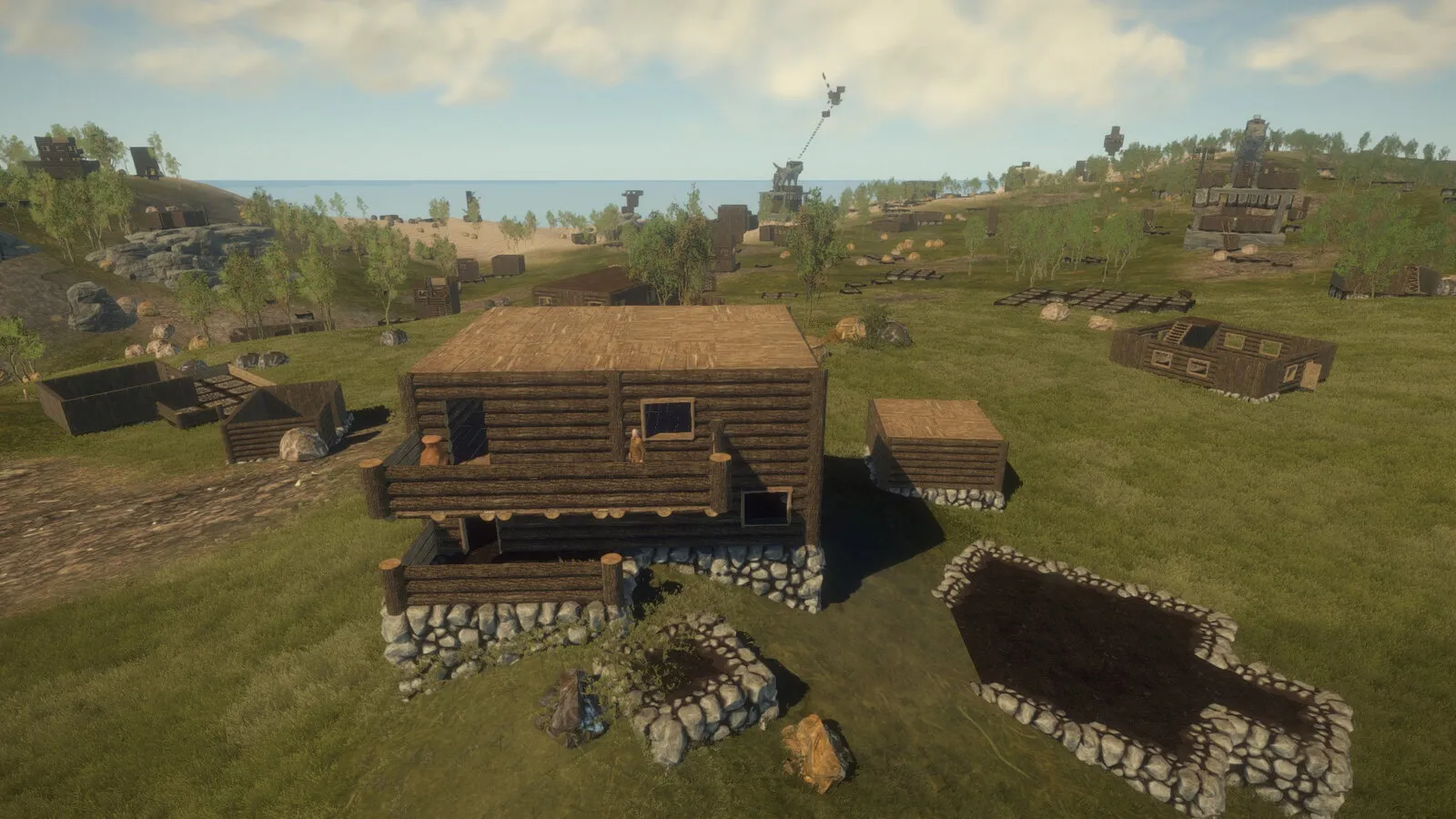
A good Rust base is compact, built in layers and keeps the tool cupboard (TC) deep inside. Wall tier, honeycomb layers and an airlock decide how much sulfur a raid costs. Figures below follow the server build after the September 2026 Breach and Clear update, and the November 2026 patch did not change wall or door health.
Wall and door health
| Piece | Health |
|---|---|
| Twig wall | 10 |
| Wood wall | 250 |
| Stone wall | 500 |
| Sheet metal wall | 1,000 |
| Armored wall | 2,000 |
| Wooden door | 200 |
| Sheet metal door | 250 |
| Garage door | 600 |
| Armored door | 1,000 |
Floors and roofs have the same health as a wall of the same grade. Your base is only as strong as its cheapest path, so a wooden roof or a weak door undoes a stone shell.
Honeycombing
Honeycombing means adding extra layers of rooms around the core, so a raider must break through each one. Every layer adds its full cost to the raid. Two sheet metal layers cost about as much to break as one armored wall, but need metal fragments instead of high quality metal. Do the same for the roof, or it becomes the easy way in. Triangle foundations and floors cost half as much as square ones for the same health.
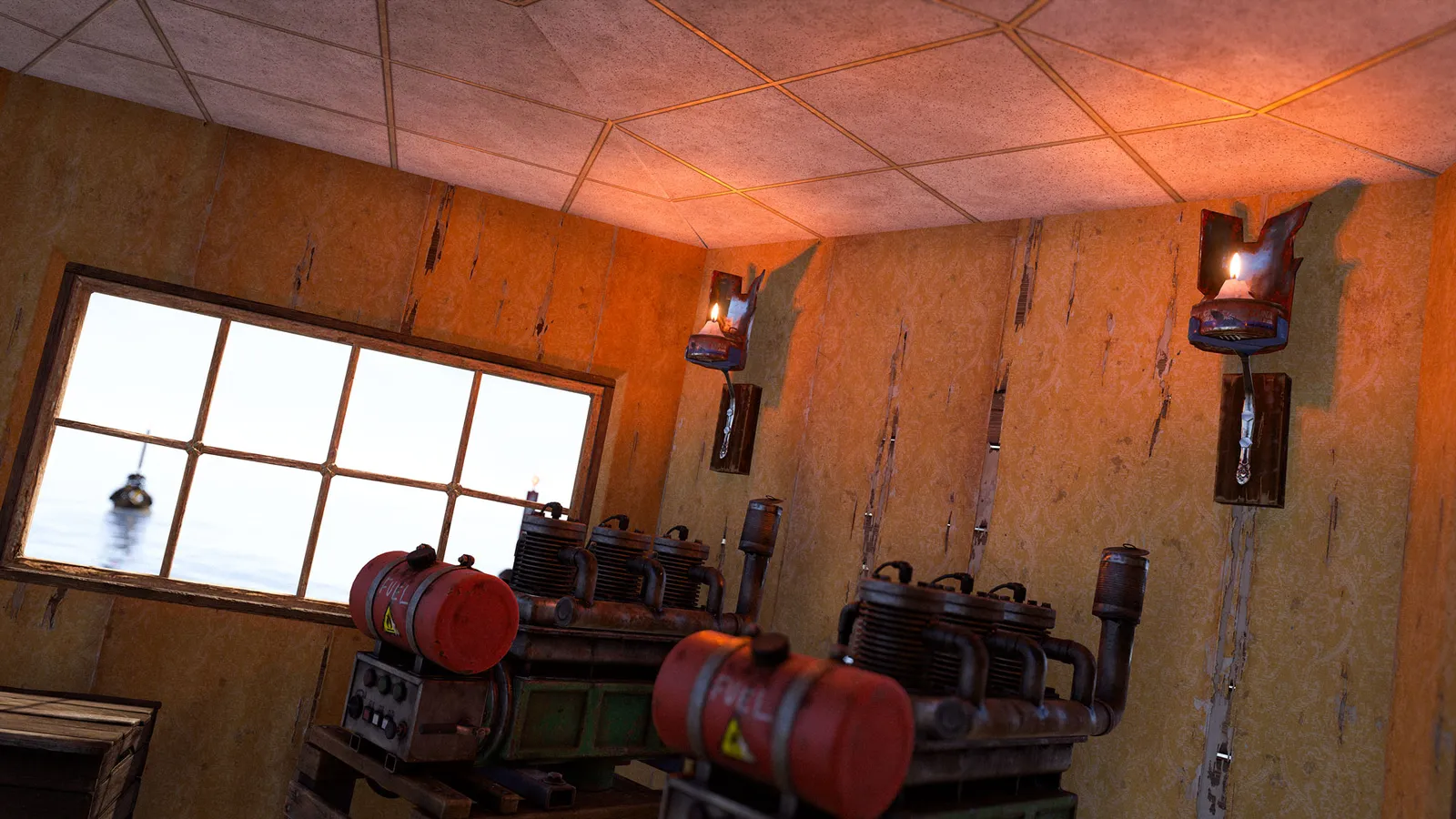
Storage, power and crafting space all shape a base layout.
Soft side and airlock
- Place walls while standing inside, so the soft face points to the interior. Walls show X marks on the soft side.
- An airlock is two doors with a closed room between them, so the inner door never faces the outside. It keeps visitors from standing right inside your base.
- Two sheet metal doors cost less to break than one stone wall, so match the airlock to the strength of the walls around it.
Tool cupboard
- It has 100 health and takes double explosive damage, so a single satchel destroys it.
- Put it deep inside, behind the most layers, and not against an outer wall. Rockets hit hardest within about one meter.
- Losing the TC means losing building privilege, and the base starts to decay.
- On Facepunch's softcore servers, the November 2026 patch limits each player to 6 placed tool cupboards. Other servers choose their own rules.
Upkeep
Upkeep is paid daily from the TC as a share of each piece's build cost. The first 15 pieces cost 10 percent, the next 50 cost 15 percent, the next 125 cost 20 percent, and anything beyond that costs 33.3 percent. A base of 100 pieces therefore averages about 16 percent a day, and 200 pieces about 18.7 percent.
| Rule | Effect |
|---|---|
| First 4 authorized players | No extra tax |
| Next 6 players | 2 percent each |
| Further players | 4 percent each |
| High walls and large gates | Fixed 20 percent per day since August 2026 |
Players who were removed from the TC in the last 24 hours still count toward the group tax. Hover over the upkeep cost in the TC to see the rate currently applied.
Solo and duo advice
- Build small. A compact base has less to pay for and less to defend.
- Build deep, with the TC and your loot in the middle.
- Upgrade the outside first, then the inside.
- Bunker and special placement rules change often, so test them on a quiet server after each monthly update.
Common mistakes
- Leaving a weak path, such as a wooden roof, a sheet metal floor or an unprotected window, next to strong walls.
- Placing the TC against an outer wall, where raiders can reach it with a single explosive.
- Letting the TC run dry, which stops protection and starts decay.
- Authorizing many players on the TC without checking the group upkeep tax first.
Quick tips
- Spread your loot over several rooms instead of one box.
- Know what you are defending against. The explosive counts per wall are in our raid costs reference.
- The beginner guide covers the first hours of a wipe.