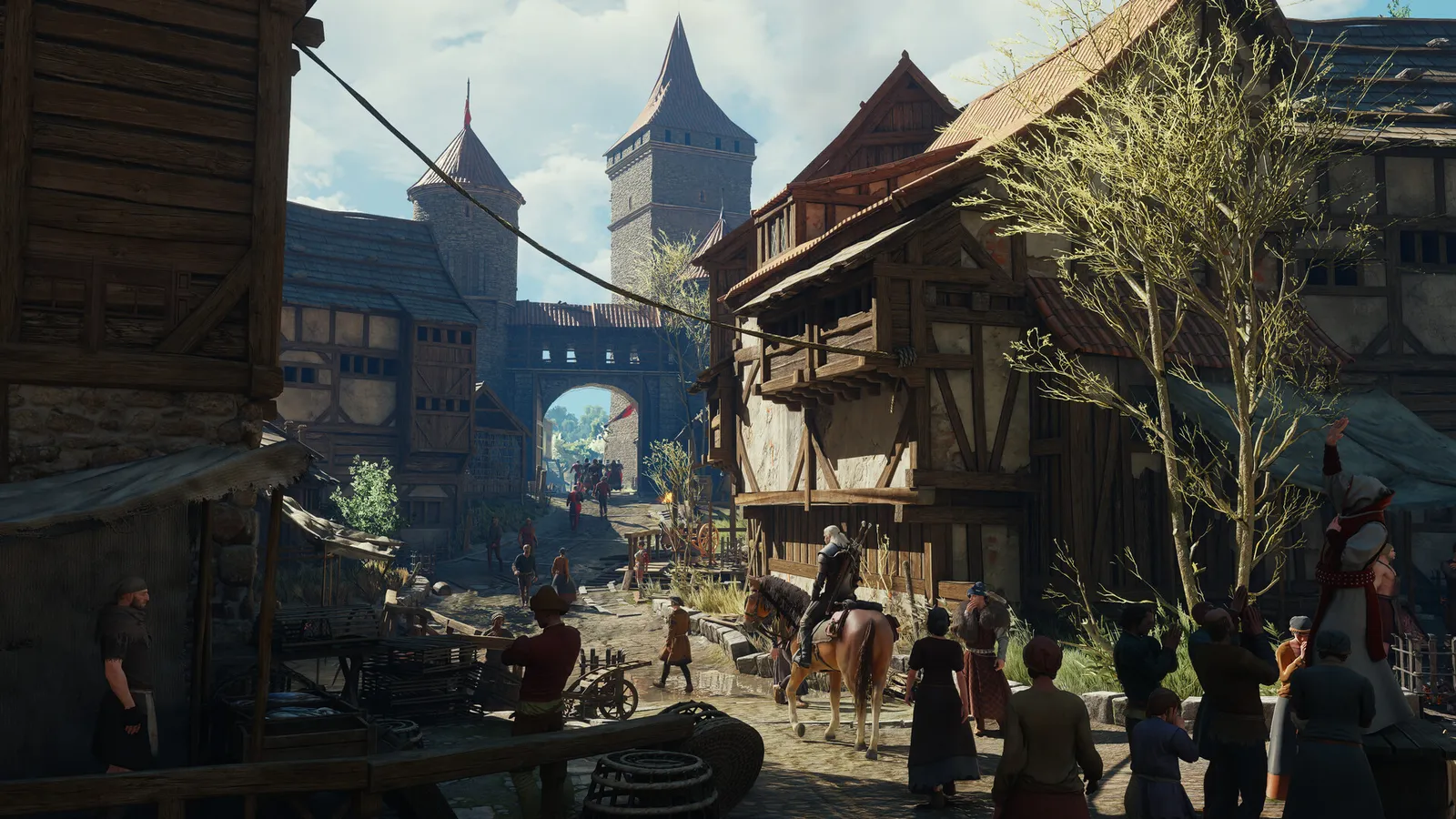
The best Gwent decks in The Witcher 3 are Northern Realms and Nilfgaard, with Skellige close behind. Northern Realms is the friendliest for beginners, because its leader draws an extra card whenever you win a round. This is the original card game from The Witcher 3, not the standalone Gwent game.
Basic rules
- You draw 10 cards, and you can redraw up to two of them once.
- Matches are best of three rounds.
- Buy cards from every merchant you meet, because some become unavailable as quests progress.
How a round plays out
Each side has three rows: close combat, ranged and siege. You play unit cards onto the row that matches them, and the side with the higher total strength wins the round. You can pass at any time, and once you pass you cannot play more cards in that round. Weather cards weaken a row for both players, Hero cards ignore weather, and a Decoy lets you pick a card back up from the board to reuse its effect. Cards you play are not replaced between rounds, so it is often smart to give up a round you cannot win cheaply and keep your best cards for the next one. The faction leader also has an ability you can use once per match, so choose a leader that fits the deck you are building.
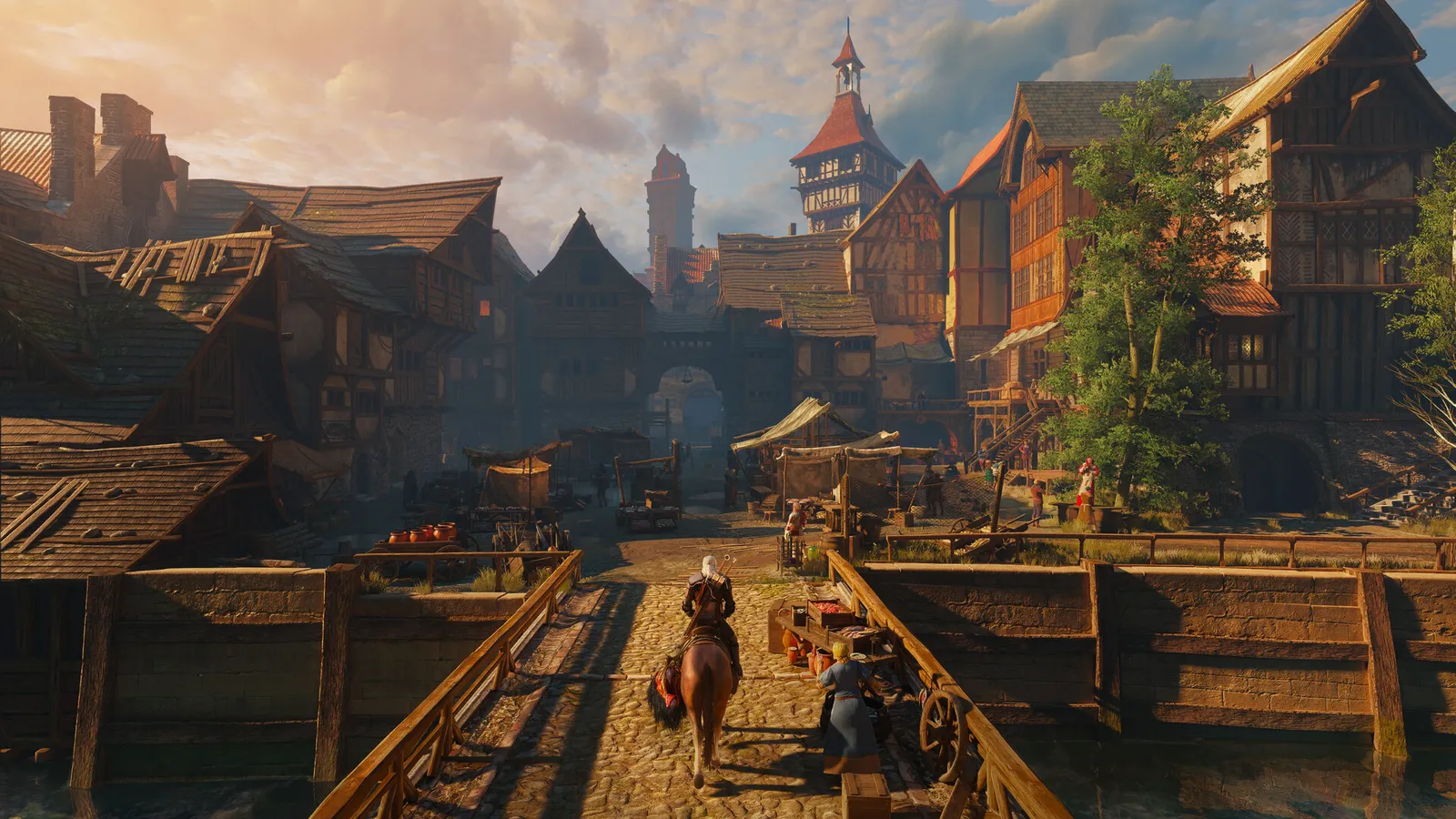
Gwent players are found in towns and taverns across the map.
Deck building rules
Your deck needs at least 22 unit cards. Special cards such as Decoys, Commander's Horns and Scorch are limited, and each faction has its own ability. Hearts of Stone and Blood and Wine add extra cards and the Skellige faction. The Remastered's official notes list no Gwent card or rule changes, so the decks below work as before; the only Gwent change is touch-screen input on Switch 2.
Faction ranking
Community opinion usually puts Northern Realms and Nilfgaard first, with Skellige close behind and Monsters and Scoia'tael after. Opinions differ, but the order is a sensible guide.
Northern Realms
Geralt starts with this deck. The leader Foltest, Lord Commander of the North, clears weather. Key cards are spies, two Catapults (Tight Bond with a Horn), three Crinfrid Reavers, three Blue Stripes Commandos, Dun Banner Medic, Dijkstra, Prince Stennis, Thaler and Villentretenmerth. Sequence your Scorch carefully so the bonded siege row survives. Cards come from the Playing Innkeeps, Velen Players, Big City Players and Old Pals questlines, and from merchants.
Nilfgaard
The leader Emhyr, the Relentless, recovers a card from the opponent's discard pile, and Nilfgaard wins ties. Core cards are spies, Medics, Decoys (to steal enemy spies), four Impera Brigade Guards, Stefan Skellen, Shilard, Vattier and Menno Coehoorn. It works best in long best-of-three matches. You build this deck from cards won from Nilfgaardian players and bought from merchants.
Skellige
The leader King Bran halves weather penalties. Core cards are Cerys with three Clan Drummond Shield Maidens (keep the Maidens in the deck through the mulligan), three Light Longships, War Longships, Kambi, Olaf and Birna Bran. Its ability resurrects two random non-Hero units in round three. This deck is required for the Great Beauclair Gwent Tournament in Blood and Wine: Count Monnier hands you a basic Skellige deck and you must build it up before you are allowed to enter. Avoid the leader Crach, who shuffles both graveyards back.
Monsters
The leader Eredin. Its faction ability keeps one random unit on the board between rounds. It relies on muster groups (keep one starter per group in hand), Heroes and Scorch protection, and it is weak to Biting Frost.
Scoia'tael
The leader Francesca gives a free Horn on the ranged row. Key cards are three Havekar Healers, muster packages, Isengrim, Milva, Saskia and Schirru. It beats the AI but has a lower ceiling. Its ability lets you choose who goes first.
Tournaments
The Velen and Novigrad quests are the route to build your cards. The Beauclair tournament in Blood and Wine requires the Skellige deck. The first opponent plays Monsters, the second Nilfgaard (so keep a Decoy for his spies) and later ones the new Skellige deck. High Stakes in Novigrad (level 26) starts with Bernard Tulle on Northern Realms, then Sasha, then Finneas on Scoia'tael and Count Tybalt on Monsters. You can swap decks between rounds, but you cannot leave to strengthen your deck once you sign up, so arrive with a mature Northern Realms or Nilfgaard deck.
Quick tips
- Start with Northern Realms and learn spies and Decoys.
- Keep medics and Scorch for the last round.
- For settings, check the Witcher 3 page.