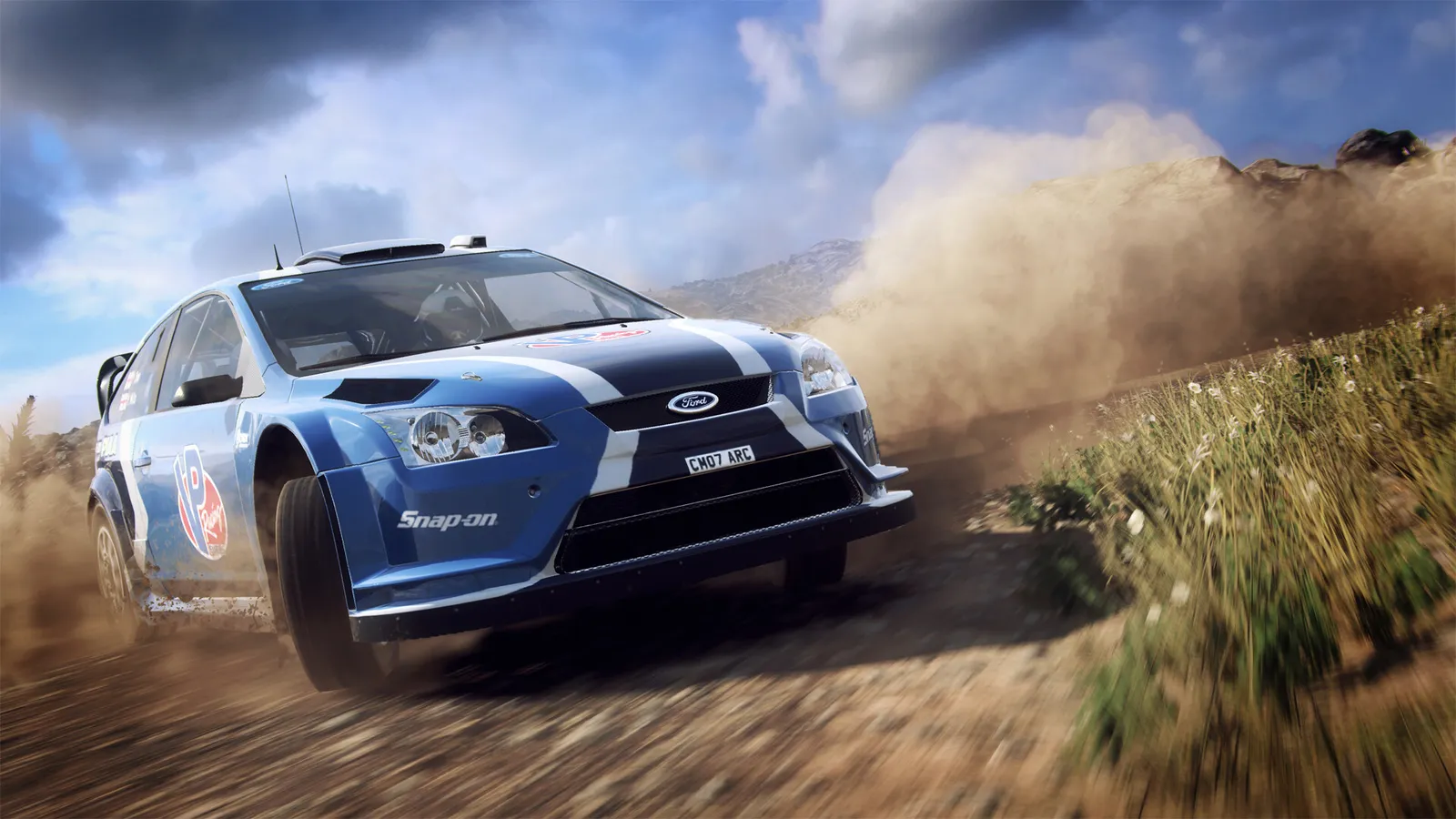
Rally punishes mistakes more than circuit racing. To start well in DiRT Rally 2.0: pick a front-wheel-drive car, turn the driving assists on for your first rallies, listen to the co-driver instead of staring at the icons and repair mechanical damage before body damage. The rest of this guide explains each point in more detail.
Which assists should you use?
Most assists are off by default. For the first rallies, turn on anti-lock braking, stability control and traction control, which help the most with handling. As you improve, turn them off one at a time. If you use a steering wheel, aim to turn most of them off, because they hide how the car really behaves. Start with an automatic gearbox and move to manual sequential when comfortable. Everything can be changed in Options and Extras, Input.
Which car type is best to learn?
| Drivetrain | Behaviour |
|---|---|
| Front-wheel drive | Easiest to handle but pushes wide in corners. Best to start. |
| Four-wheel drive | The most traction out of corners, but slower on entry and at top speed. |
| Rear-wheel drive | The most power and the trickiest, because the rear steps out easily. Move here when comfortable. |
You can try any car in any championship, and you can test drive a car before you buy it. An easy starting car is the Lancia Fulvia HF.
How to use the co-driver
The co-driver tells you what is ahead. Missing a call costs time, so listen, and see our pace notes explained for what each call means. You can change how early the calls arrive with the Co Driver Calls slider in the preferences.
How to drive on loose surfaces
- Do not hold the throttle flat. Modulate it, especially on gravel and dirt, to keep traction.
- Brake in a straight line, then turn.
- Use the handbrake sparingly, mainly on hairpins and to tighten a turn. Brake and throttle will get you through most corners.
- A wide road with many hairpins, such as the New England stages, is a good place to practise.
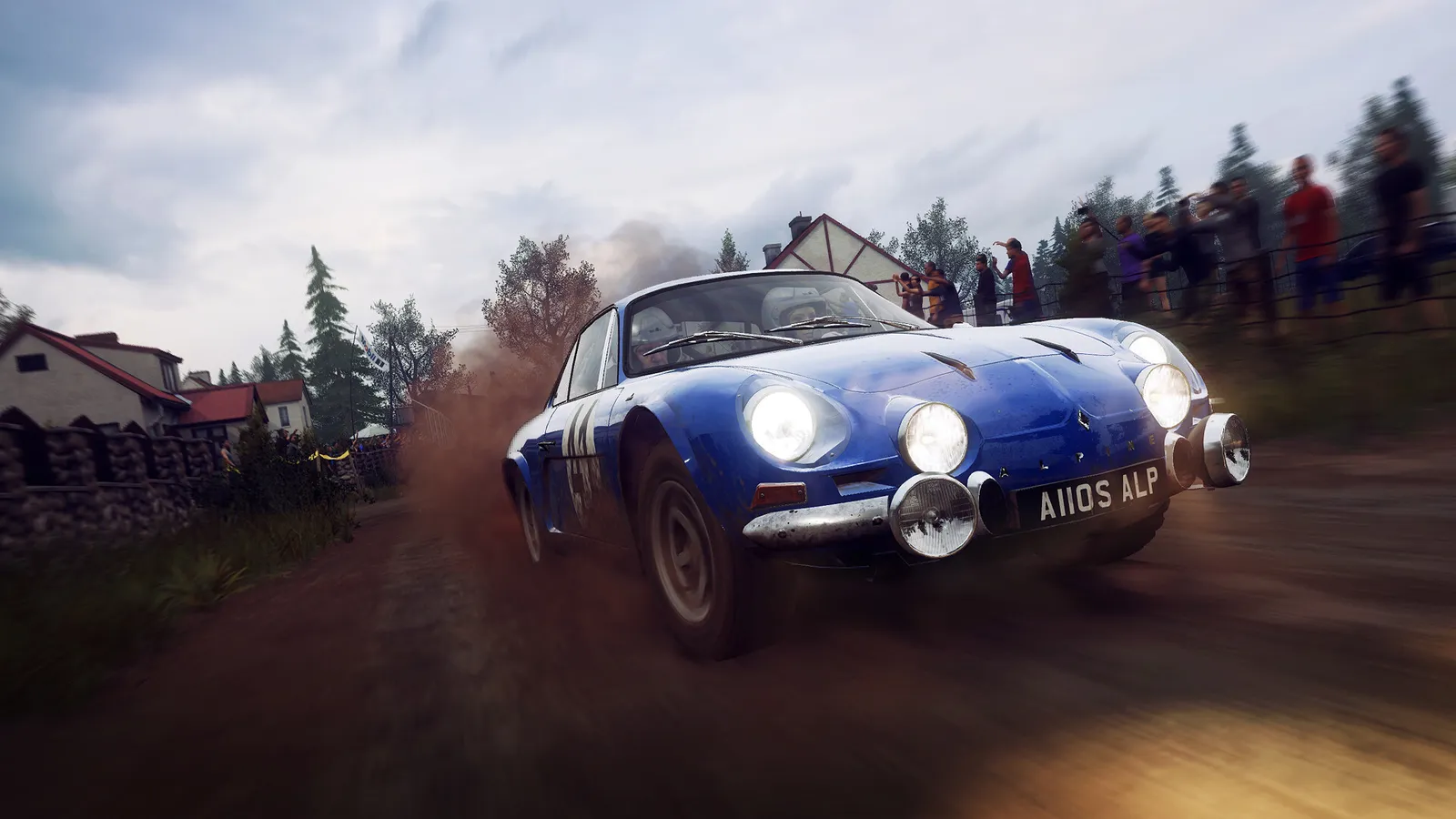
Smooth inputs keep a car on loose roads.
Which car classes are easiest to start with?
The game groups cars into classes, and the lowest ones are the gentlest. These are the classes at the bottom of the community wiki's list, all of them in the base game:
| Class | Drive | Cars |
|---|---|---|
| H1 | Front-wheel drive | Mini Cooper S, Lancia Fulvia HF, DS 21 |
| H2 | Front-wheel drive | Volkswagen Golf GTI 16v, Peugeot 205 GTI |
| R2 | Front-wheel drive | Ford Fiesta R2, Opel Adam R2, Peugeot 208 R2 |
| H2 / H3 | Rear-wheel drive | Ford Escort Mk II, Alpine A110, Fiat 131 Abarth, BMW E30 M3 and others |
Group B (rear-wheel and four-wheel drive), Group A, R5 and Rally GT cars are much faster. Move up only after you finish stages without a crash in the lower classes.
Which location is best to learn on?
The base game has six rally locations, each with twelve stages (six one way, six the reverse direction): New Zealand, Argentina, Spain, Poland, Australia and the USA. By stage length they are quite different: Argentina's longest stage is about 8 km, the USA and Australia go to about 12 to 13 km, Spain to about 14 km, and New Zealand and Poland to about 16 km. Short stages punish a mistake less. Argentina and the short New England sprints (about 6 km) are a gentle place to start, while the long stages of New Zealand and Poland ask for concentration.
What is rallycross and do I need it?
Rallycross is the second discipline: short races on a loop of mixed dirt and tarmac. Twenty entrants race in groups of five for heat points; the top 12 after four heats go to the semi-finals and the top three of each semi-final go to the final. Every driver has to take one joker lap, which is a longer alternative route. It is optional if you only want rally, but it is a good way to practise racecraft.
Tyres, repairs and service
- Tyres: soft ones grip best but wear fast, hard ones last longest and medium is a balance. Choose by the length of the coming stages.
- Service time is limited, and going over it costs a time penalty. Plan your repairs.
- Repair order: mechanical parts (engine, gearbox, steering, suspension, tyres) before bodywork, unless the damage affects aerodynamics.
- If you only want to drive, the auto repairs assist handles it for you.
Quick tips
- Finishing beats being fast: a crash costs far more time than a slower corner.
- Use the recover button if you leave the road or roll.
- Learn the setup screens later; the default setup is fine to start.
- Playing with a wheel? See the wheel settings.