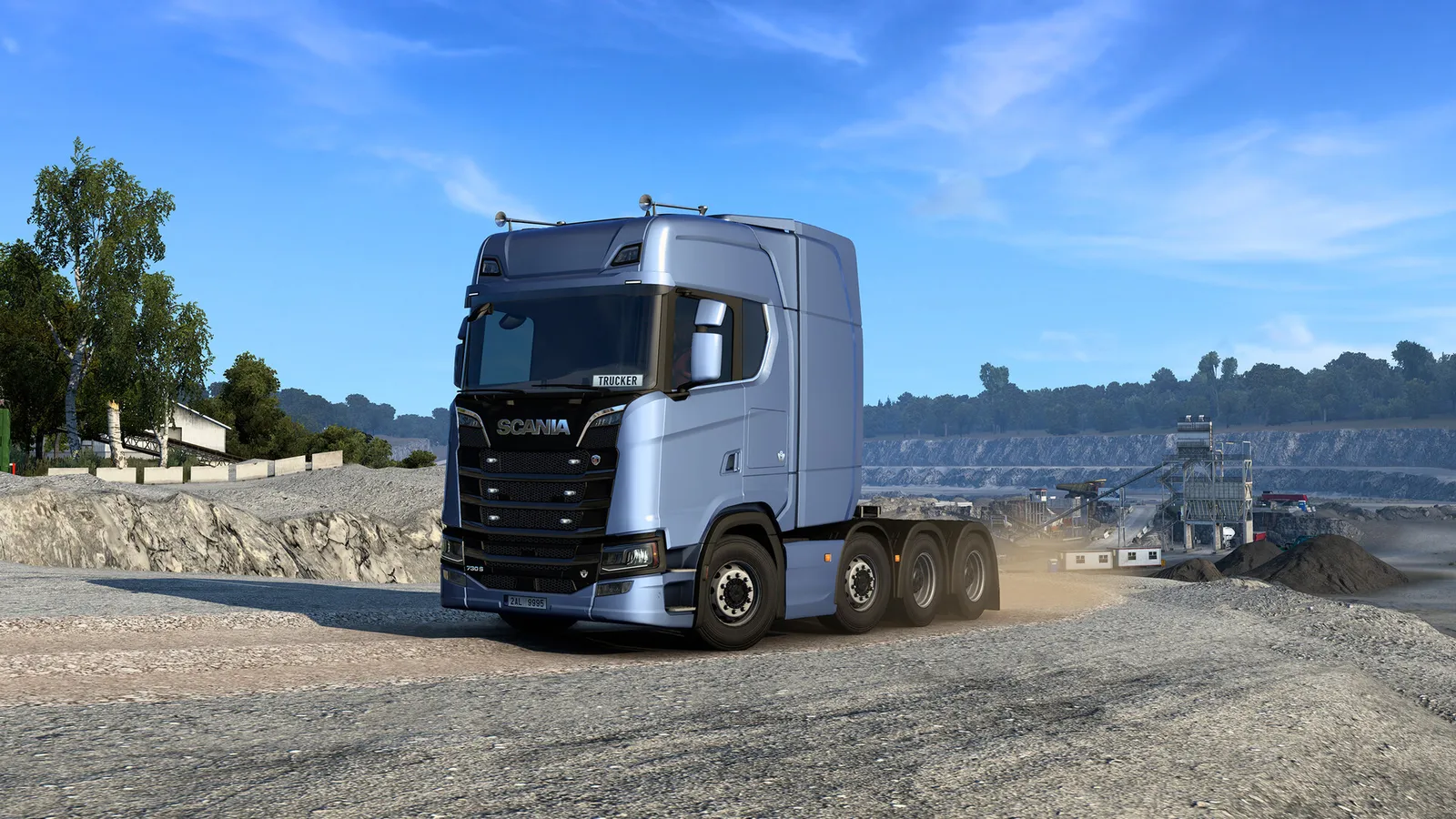
In Euro Truck Simulator 2 you hire a driver at a recruitment agency for a one-time fee of 1,500 euros, but the driver only works once you give them a garage slot and a truck. The real work is in the order you do things: buy garages in busy cities, hire one or two drivers, train them on the right skills, and only then scale up. This guide walks through that loop and the mistakes that make new hires lose money. For the early game before this point, read the ETS2 money guide first.
How do you hire a driver in ETS2?
Hiring happens at a recruitment agency. There are well over a hundred of them, mostly in larger cities, and you discover one by driving past its street once. After that it shows on the map and in the menu, and you can open it from there. Each candidate comes with a rating and a starting wage, and the fee is the same for everyone.
- Drive through a large city until the recruitment agency icon appears on your map.
- Open the agency and compare candidates. The overall rating and the skill spread are what matter; the fee is a flat 1,500 euros.
- Hire the driver and assign them to a garage. A garage needs a free slot for a driver, so own a garage with room before you hire.
- Give the driver a truck. If you have no spare truck yet, the driver waits in the garage slot and does nothing.
Once a driver has a truck, they start taking jobs on their own, normally running from their home city out and back. Sometimes there is no return cargo, so part of the trip is driven empty. Trailers cannot be assigned to drivers: you park trailers in garage slots and the drivers use whatever fits.
What do garages cost and how many drivers fit in one?
Your first garage is the headquarters. It is tiny: one truck bay and one driver slot, and your own truck normally sits in it. Every upgrade after that is a big purchase, so plan the order.
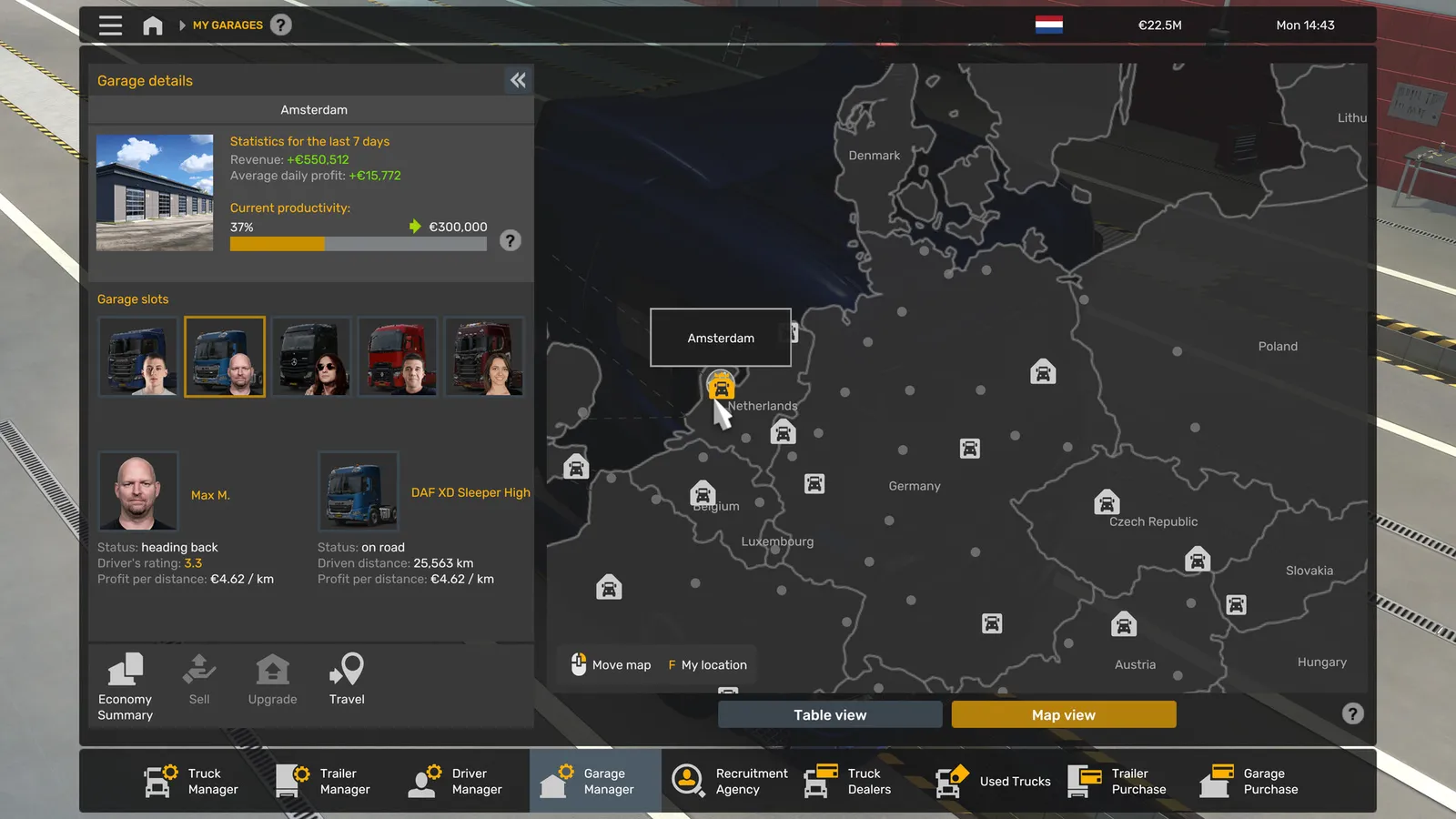
The garage manager lists each garage with its slots and the drivers placed in it.
| Garage step | Price | Truck and driver slots |
|---|---|---|
| Headquarters (start) | Free | 1 |
| Upgrade HQ or buy a new garage | 180,000 euros | 3 |
| Upgrade a 3-slot garage to a large one | 100,000 euros extra | 5, with a fuel pump |
Every purchased garage includes a rest stop, and all of them work as quick travel points. The large garage has its own fuel pump, and diesel there is roughly 15 percent cheaper than the normal price in that country. Online garage purchases unlock after you own a few of them.
Where should you put your garages?
Drivers earn by running jobs from their home city, so a garage in a city with lots of outgoing freight and good motorway links is worth more than one in a quiet corner. Big central hubs such as Berlin, Frankfurt, Paris or Lyon are the common picks. Isolated cities, or ones where most jobs need a ferry, produce more empty legs and more detours. Put the first purchased garage where you already like to drive; your own jobs benefit from it too, because you can use it as a quick travel point and a free rest stop.
Which skills should you train first?
Each driver levels up from the jobs they complete and earns one skill point per level. By default the Driver Manager uses a "Balanced" training policy that spreads points evenly. You can change that per driver in the Driver Manager, inside the Company Manager. The six skills are:
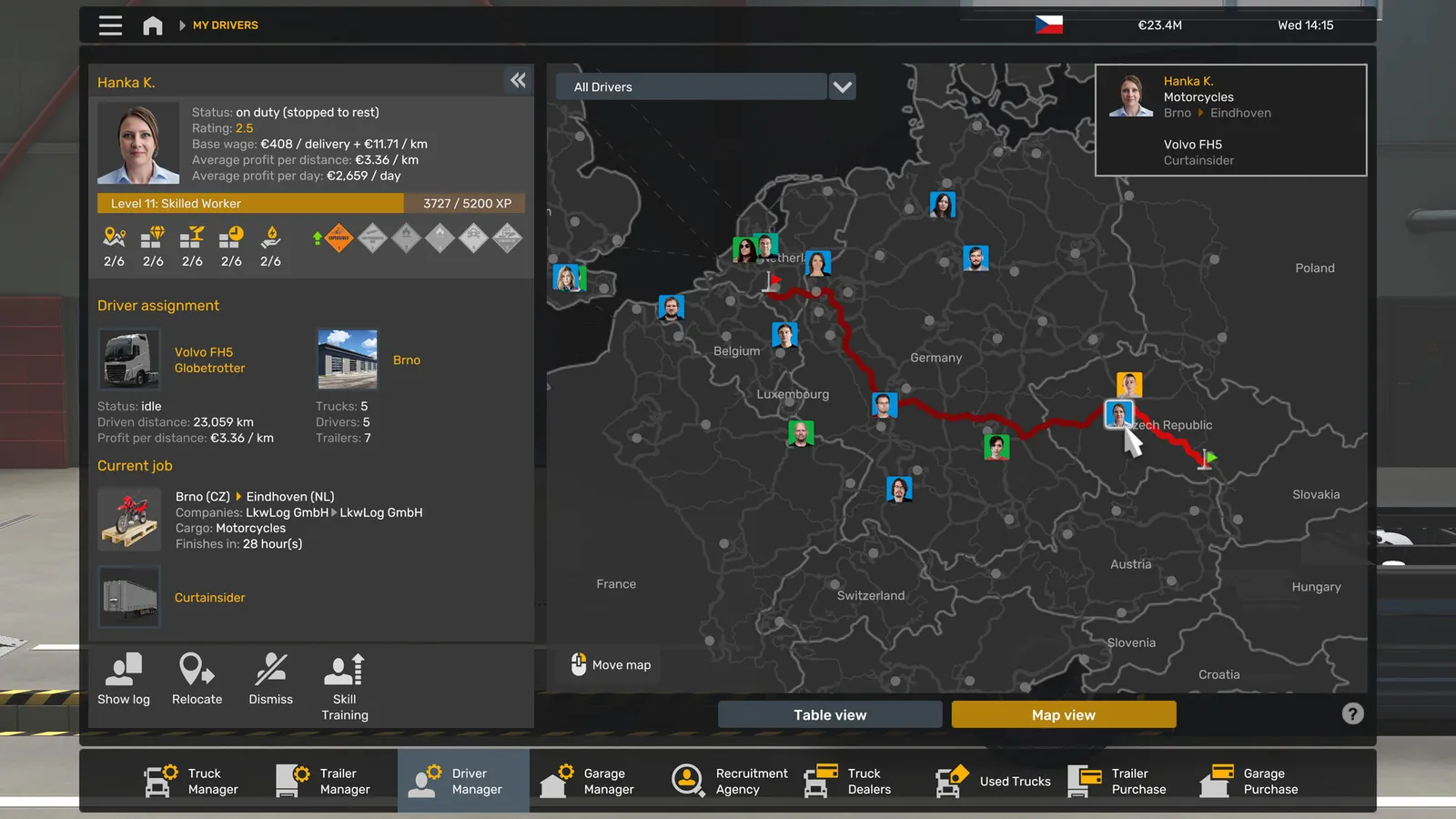
The driver manager shows each driver's skills, rating and current route.
| Skill | What it does |
|---|---|
| Long Distance | Raises the maximum job distance; longer jobs pay more |
| ADR | Allows dangerous goods |
| High-Value Cargo | Unlocks valuable loads reserved for proven drivers |
| Fragile Cargo | Allows delicate goods such as glass and electronics |
| Just-In-Time Delivery | Unlocks urgent jobs with tight deadlines and better pay |
| Eco-Driving | Lowers fuel use |
Long Distance is the usual first choice because it opens the best-paying hauls, followed by ADR. Spend at least one point in every skill early on as well: a driver who has no suitable job available drives home empty, and empty kilometres cost money. Eco-Driving is the one to leave for last.
Do drivers make money, and how much?
A driver's rating rises as you train them, and a higher rating means higher income, but also a higher wage. On every finished job the game deducts the driver's wage, fuel and tolls from what the job paid. New, untrained drivers earn very little and can run at a loss on a bad trip. Trained drivers earn well, but the figures players report differ wildly, from a few hundred to several thousand euros per day, so treat any single number you see as unreliable. The Route Advisor shows what your employees actually earn, and that is the only figure worth trusting for your own save.
How many drivers should you hire?
- Start with one or two. Watch their income for a few in-game weeks before you hire more.
- Keep your own jobs going. A loan is reasonable if your own deliveries clearly cover the repayments, but a dozen untrained drivers bought with borrowed money is the classic way to stall a save.
- Do not over-spend on trucks. A driver needs a working truck to earn anything, but an expensive one is not a requirement.
- Remember what drivers do not do. They do not appear on the road, and they are not part of convoys or World of Trucks contracts. They are a passive income stream that runs in the background.
Quick tips
- Spread new hires over several garages to avoid stuffing every driver into one city's job market.
- Switch the training policy away from Balanced the moment you hire.
- Recheck rating and wage after each level: a driver who looks good now can become the weakest earner later.
- Garages have no upkeep, so an unused slot costs nothing; only the purchase price matters.
Next up: learn the controls and how to avoid falling asleep at the wheel in fatigue, rest stops and controls, and pick your own skills with the skills guide.