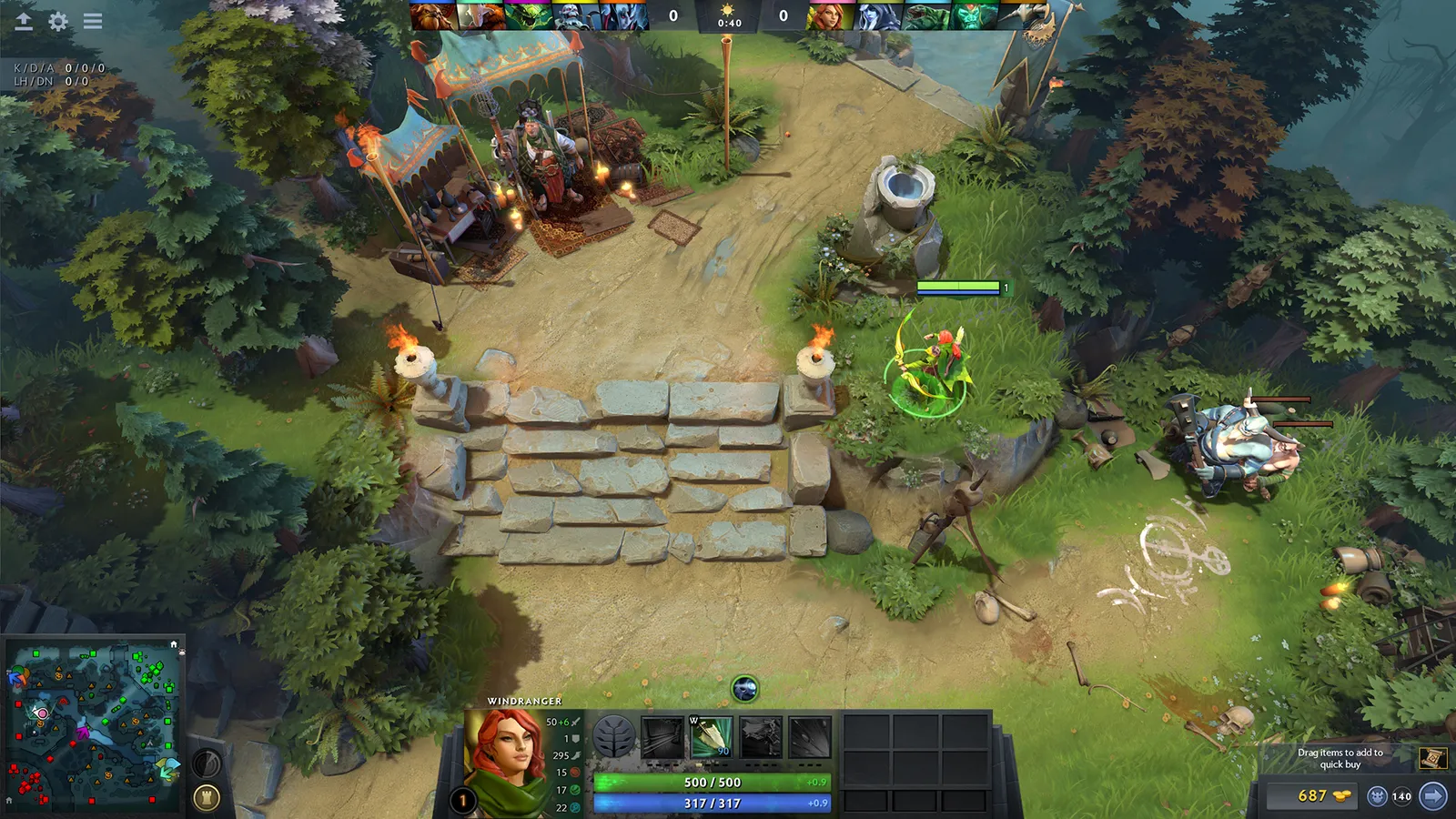
In Dota 2 a last hit means landing the blow that kills a creep, which is the only way to collect its gold. A deny means killing one of your own creeps once it is badly hurt, so the enemy gets no gold and only a reduced share of its experience. Good last hitting comes from knowing your own damage and attack timing, not from fast clicking. Written for the 7.41 patch line (autumn 2026); values move with patches, so calibrate in the client.
Why do last hits matter so much?
Every lane wave carries gold. The player who gets the killing blow earns it, and gold turns into items, which turn into the ability to fight. Experience is different: it is shared with every nearby hero of the enemy team, so you level up simply by standing in the lane, but you only earn gold by finishing the creep. That is why a carry who ends the laning stage with a clear lead in last hits starts the mid game with a large item advantage, even if no hero ever died.
The lane itself is a rhythm. A fresh wave of creeps leaves each base every 30 seconds, the two groups walk toward each other and meet at a point that depends on the lane. Where they fight is called the lane equilibrium, and it decides how close you stand to your own tower. Patch 7.41 moved the meeting point of the lane creeps toward the offlane and briefly slowed offlane creeps after they leave their base, while safe lane creeps briefly accelerate. In practice the offlane creeps now tend to meet nearer to the offlane tower than they used to, which affects how easily the offlaner can farm.
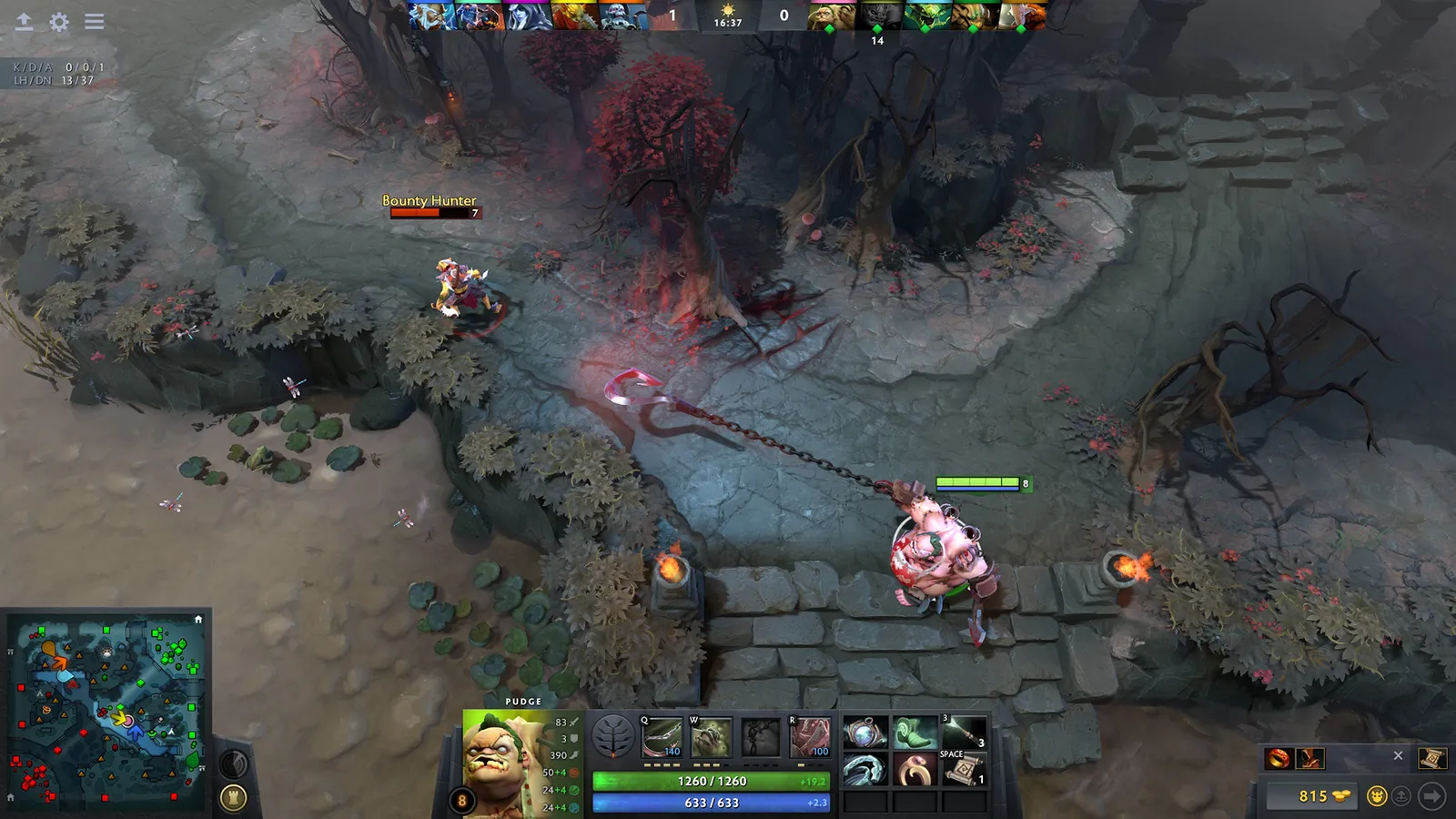
Where a lane ends and the jungle begins decides how safely you can farm.
How do you last hit a creep?
Four things decide whether a hit connects: how much damage you deal, how long your attack takes to land, what else will hit the creep first, and whether the risk of walking up is worth the gold.
- Learn your damage. Your attack does a range of damage, and levels and items change it. After the first few waves you know how far down the health bar a creep must be before one hit kills it. Recheck this after every damage item.
- Understand the attack point. Every hero has an attack animation. Damage is dealt at a certain point of the animation, and ranged heroes add the travel time of the projectile on top. If you cancel the animation before that point, the attack does not happen and the time is wasted. Face the creep, step into range, and let the attack play out.
- Predict, do not react. By the time you see a creep drop low, it is usually too late. Look at the creeps attacking it and guess when the next hit lands, then start your attack so that yours arrives right after it.
- Read the other creeps. Ranged creeps are fragile and give more gold than melee creeps, so they are usually the first target when two are low. Your own creeps also shorten the window, because they damage the same creep you want.
- Do not attack creeps with full health. Hitting a creep you will not finish pushes the wave toward the enemy and changes where the lane stands.
What is denying and when should you use it?
You can attack a friendly creep once it has fallen below 50 percent health. This is a deny. The enemy hero nearby loses the gold and gets a reduced share of the experience, so a good deny can win you the lane without ever hitting an opponent. You earn no gold from a deny yourself, so use it when it costs the enemy more than it costs you.
- Supports and offlaners use denies the most, because they often cannot last hit safely and still want to keep the enemy carry small.
- Carries should focus on their own last hits and deny when it is free.
- Deny while the enemy walks up. If the enemy has to step forward to last hit, deny the creep first and punish the step.
- Do not deny blindly. The option only exists once the creep is below the threshold. Hitting a healthy friendly creep is not possible, so check the health bar first and keep your attention on the enemy's reach too.
What about last hitting under a tower?
Towers hit creeps on a fixed cycle, so the same pattern repeats. Watch one full cycle of tower damage, note what the creep's health is just before the tower shot lands, and add one early hit only if that creates a reliable window. Allied and enemy creeps change this cycle, so recalibrate when the tower hits something different. This is the situation where most players lose last hits, which is why a calm, calibrated rhythm beats a fast one.
How do you handle aggro?
Creeps choose a target, and if an enemy hero attacks one of your heroes within their range, nearby creeps may turn on that hero. You can use this deliberately. Stepping back with the enemy's creeps following you makes a contested creep move, and you can pull the wave closer to your tower for safety. Used without a plan, aggro also drags the wave into places you did not want, so use it for a purpose, such as breaking a bad lane position or saving a creep.
Where can you practise?
Use a practice setup (Hero Demo or a bot lobby with a hero you know) and run short drills:
- Calibrate. Pick one hero. Note the attack timing and the damage, and count your misses. Ask why you missed: too early, too late, wrong target or interrupted.
- Control. Move one creep toward safety while still collecting the next one.
- Pressure. Add an opponent or a stricter rule, and separate mistakes you chose from mistakes of execution.
- Tower. Observe, prepare, finish. Rebuild the pattern from the damage you see.
There is no universal last hit count at ten minutes. A more honest measure is how many of the safe opportunities you took, how many denies you chose and why you missed the rest. Track that over several games.
Quick tips
- Do not click faster, click earlier.
- Recalibrate whenever your damage changes.
- Deny when it costs the enemy more than it costs you.
- Use the same hero for ten games before you judge your last hitting; timing resets with every new hero.
- Smooth frames help timing: see the Dota 2 FPS boost page and our lag guide.
- Not sure which role to start with? Read Dota 2 positions explained and best heroes for beginners.