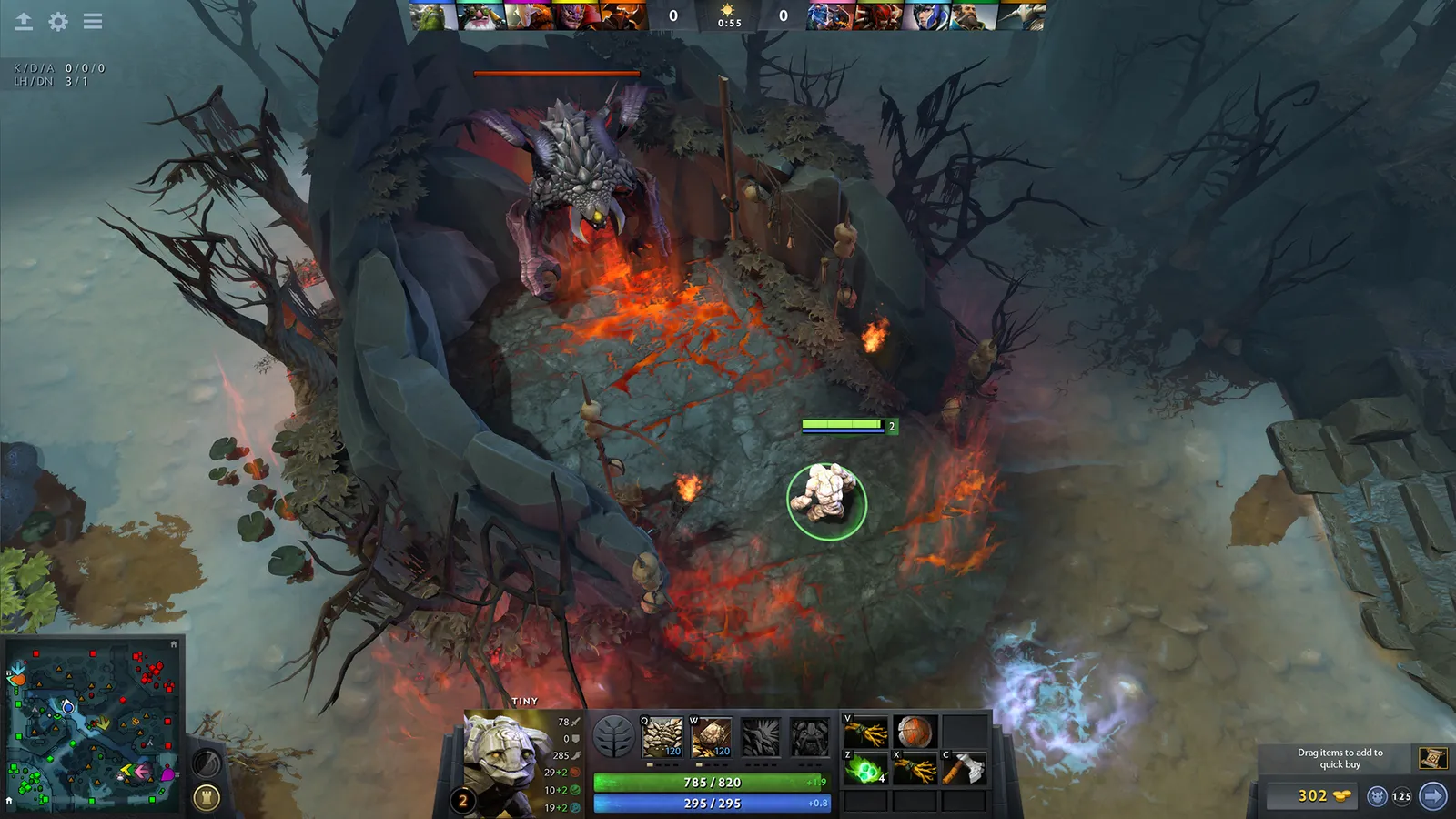
Supports are positions 4 and 5: the players who farm the least and carry the team's vision, saves and early fights. A position 5 (hard support) plays the safe lane next to the carry, buys most of the early wards and keeps the lane comfortable. A position 4 (soft support) usually plays the offlane next to the position 3, rotates earlier and creates fights. Written for the 7.41 patch line, autumn 2026; item prices and hero strength change with patches.
What is the difference between position 4 and position 5?
| Position 4 (soft support) | Position 5 (hard support) | |
|---|---|---|
| Lane | Offlane, with the position 3 | Safe lane, with the carry |
| Farm priority | Low, but above position 5 | Lowest on the team |
| Main job | Roam, start fights, take space | Protect the carry, supply wards |
| Typical early shopping | One observer ward, one sentry, a stat item | Two observer wards, a sentry, regeneration |
The split is a habit of the role, not a rule. Some drafts put a position 4 in the safe lane, and some heroes are played in either slot. Our positions guide explains the five roles in full.
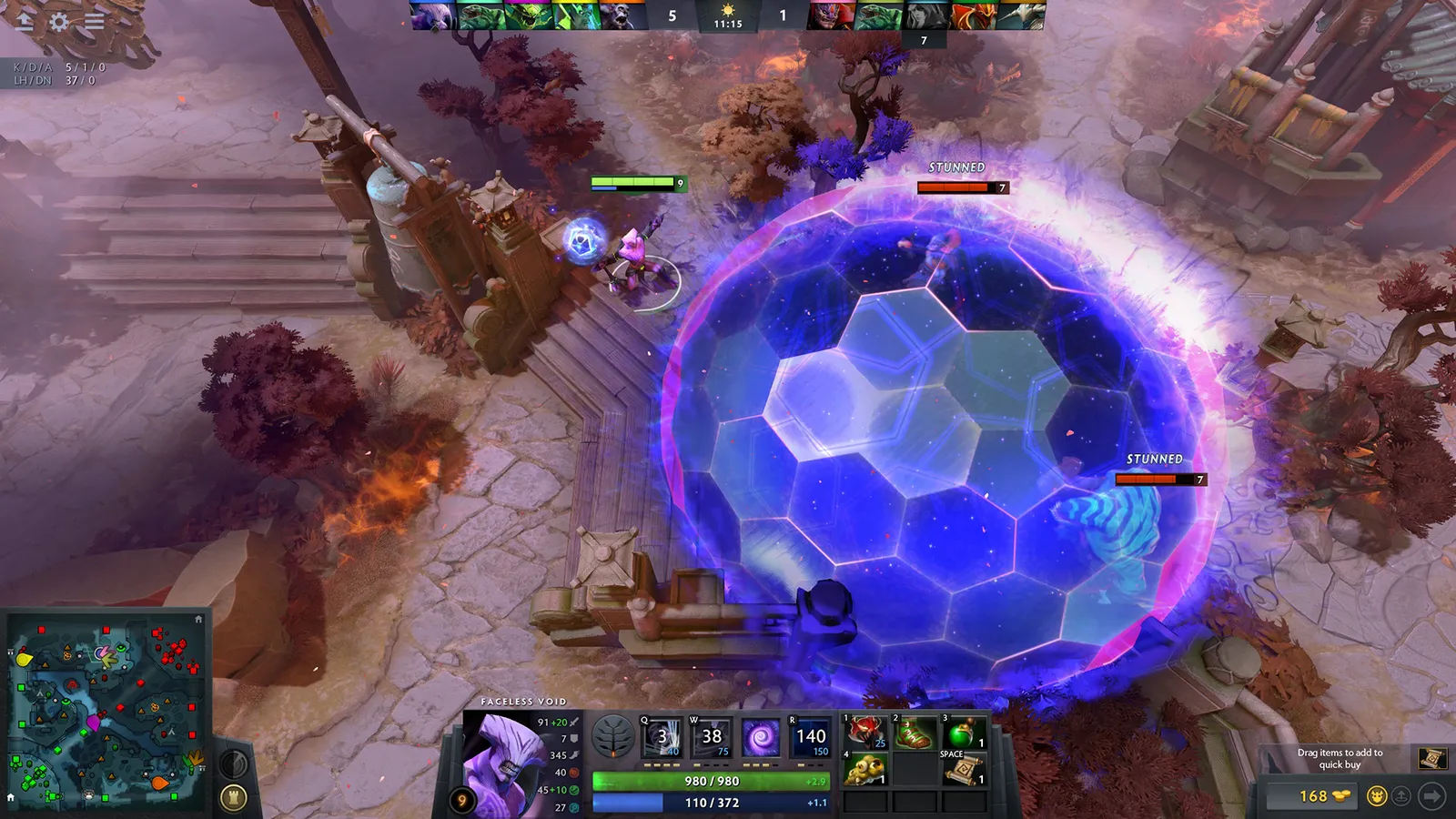
Team fights are decided by saves, disables and vision, which is the support job.
What should a support buy at the start?
Most support players start with cheap regeneration (a Tango or Healing Salve), a mango or clarity for mana, and wards. A position 5 usually buys two observer wards and a sentry. A position 4 can start with one observer and one sentry and add a stat item. The shared rule is that your gold goes into the team: wards, a courier upgrade, dust and a Town Portal Scroll before you buy items for yourself.
The courier is easy to forget. One player on the team, usually a support, should upgrade it so that items reach everyone safely and quickly.
Where should the first wards go?
Place the first two wards before the horn goes. A solid early set covers the spot where the enemy pulls a camp, and a high-ground perch that sees the enemy carry's lane and the ways into it. Early vision means fewer surprise ganks and a better view of when the enemy support leaves the lane. Placing wards late (after the first creeps arrive) costs you farm time and leaves you without vision at the worst moment.
Sentry wards have three jobs: they stop the enemy pulling camps in the lane, they reveal invisible heroes, and they clear enemy wards before you walk into Roshan's pit. Bring one on any rotation where invisibility is possible.
How do you pull and stack?
Pulling means drawing a neutral camp toward the lane creeps so they fight each other and the lane is pushed back to your side. It protects the carry, gives the lane more room, and can deny experience to the enemy. Stacking means pulling a camp away just before it respawns, so a second group spawns on top of the first. Reference timings that many players use are the last seconds of the minute, around :53 to :54, with larger camps needing a slightly different moment. A stacked ancient camp is a strong farm for a core later on, and a position 5 can do it when the lane is quiet.
Practice both in a bot match: it takes a few attempts to see where the camp's aggro range ends and to learn each camp's timing.
What do you do in the mid game?
- Keep two observer wards active and carry at least one sentry. Replace wards before they expire, not after.
- Smoke of Deceit for rotations. It lets you walk into the enemy's area without being seen by their vision, which makes your first fight a surprise.
- Cover the Roshan pit and the high-ground ramps before the first Roshan timing, around the 15 minute mark, so you see the enemy before they see you.
- Always carry a Town Portal Scroll. Fighting without one means you cannot rejoin a lost lane or save a tower.
- Stay with the core. Stand behind, not in front of, your carry. Standing in front of them steals last hits and draws aggro.
Which items do supports build?
The same item choices appear in most games, with the exact picks depending on the hero and the enemy team:
- Early: a Magic Wand, boots such as Tranquil or Arcane Boots, and a movement item.
- Situational: Glimmer Cape, Force Staff, Ghost Scepter or Eul's Scepter to save a core or start a fight.
- Late: Aghanim's Scepter, Lotus Orb, Guardian Greaves or Aeon Disk, when you finally have the gold to buy something for yourself.
Late in the game a support will be at about half the net worth of the enemy carry, so value comes from saves, disables and vision, not from damage. Be the first to Blink or Force Staff into a fight when it can save a teammate, and keep buyback if your ultimate decides fights.
Which heroes are good for supports to start with?
Heroes with a simple kit and strong lane presence are the easiest to learn. Recent public data across the 7.41 patches has put heroes such as Lich, Witch Doctor, Shadow Shaman, Crystal Maiden and Venomancer among the stronger supports, but different sites measure this differently and patches shift it, so use it only as a starting list. Choose one hero, play it for at least ten games and learn its timings before you try another. Our best heroes for beginners page lists easy picks for all roles.
Common support mistakes
- Placing wards late and then walking around without vision.
- Standing in front of the carry and stealing last hits.
- Skipping the courier upgrade for the team.
- Fighting without a Town Portal Scroll.
- Ignoring stacks, which leaves a lot of neutral gold unused.
- Buying items for yourself while the team has no wards.
Quick tips
- Ping your ward spots so the team knows what you cover.
- Check the minimap every few seconds; most ganks are visible a few seconds early.
- If you play with a stuttering client, your timing suffers: see our Dota 2 FPS boost page.
- For the creep fundamentals that every lane relies on, read the last hitting and denying guide.