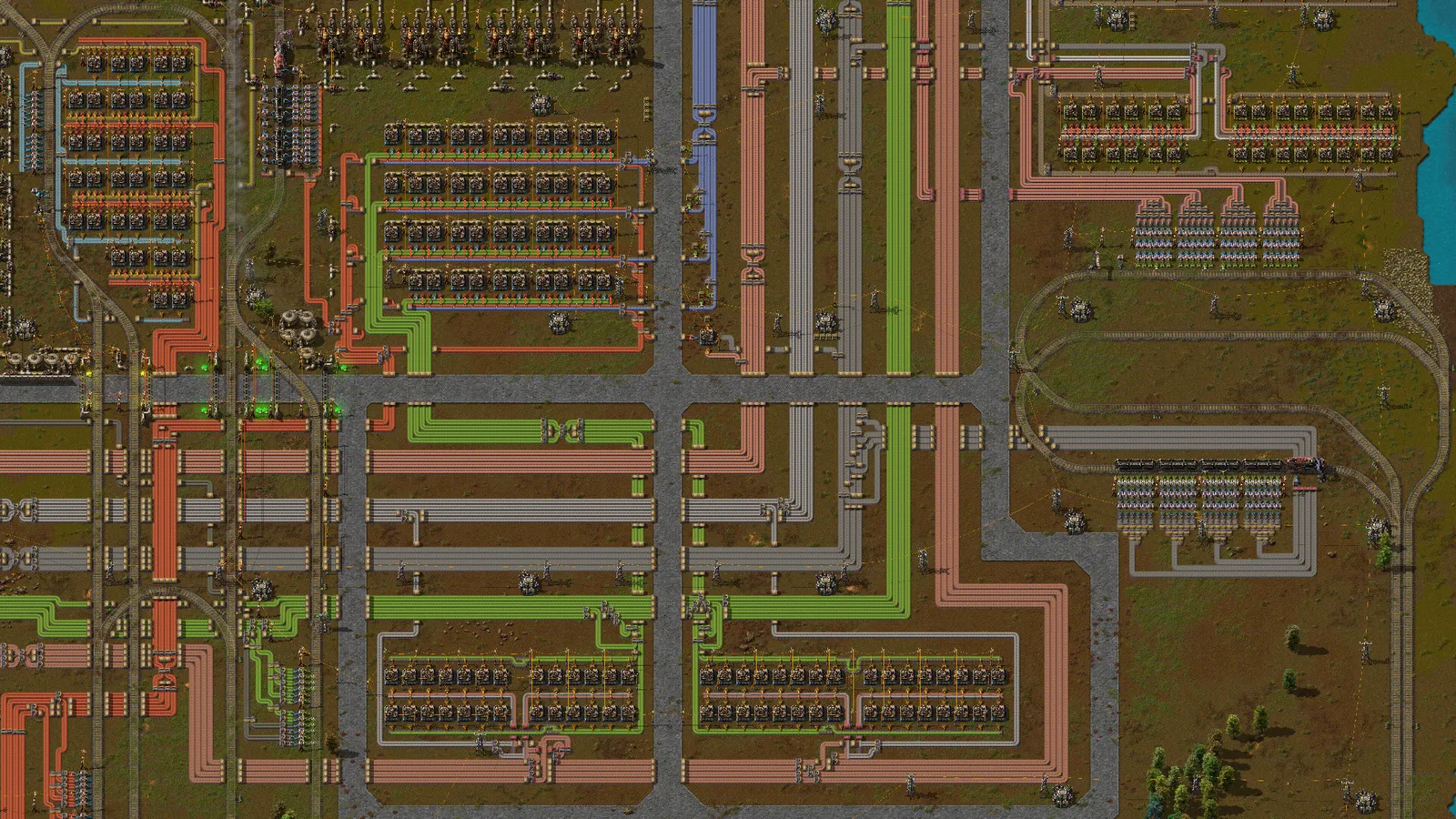
A main bus is a bundle of parallel belts, each carrying one item, that runs past your factory so production blocks can tap what they need. It is the simplest way to organise an early or mid-game base, but it only works if you respect belt throughput and leave room to grow. Here is how to build one and where it breaks.
Belt throughput
A belt has two lanes and each carries half of the total. Know these numbers before you plan a bus:
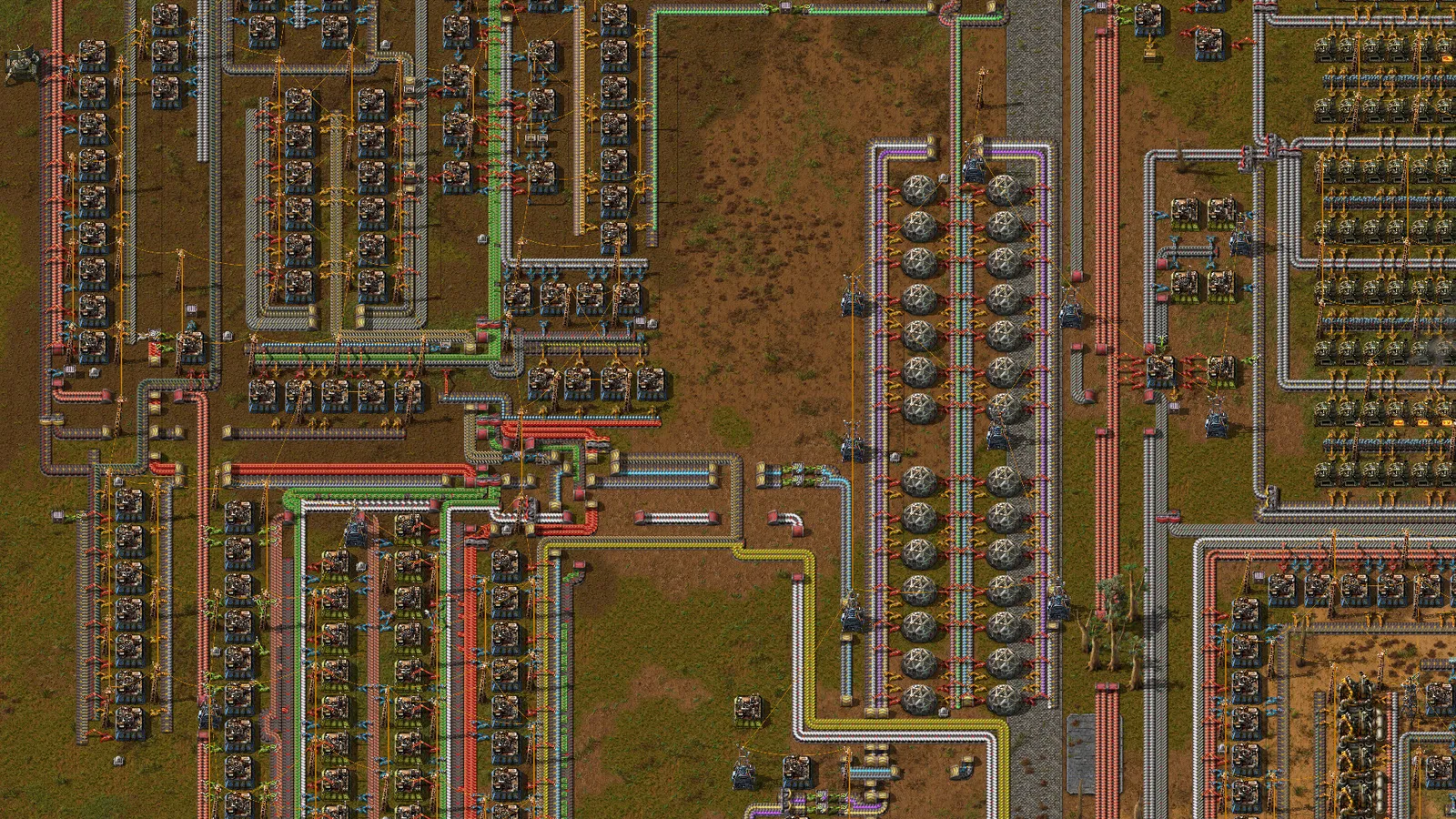
A main bus feeds parallel assembler lines.
| Belt | Per lane | Both lanes |
|---|---|---|
| Yellow transport belt | 7.5 items/s | 15 items/s |
| Red fast belt | 15 items/s | 30 items/s |
| Blue express belt | 22.5 items/s | 45 items/s |
| Turbo belt (Space Age) | 30 items/s | 60 items/s |
A splitter divides its input evenly between its outputs. Its throughput is that of its belt tier, so a yellow splitter handles 15 items per second. Splitter priority and filters have existed since 0.16.17 and are still in Factorio 2.0, and from 2.0.67 splitters can also be connected to the circuit network. In 2.1 inserters always drop onto the input side of a splitter, and machines show a drop arrow that tells you which belt lane they will fill.
What goes on the bus
Use one dedicated belt per item. Typical contents are iron plate, copper plate, iron gear wheels, electronic circuits, advanced circuits, steel, processing units, batteries, plastic (or coal), stone and sulfur. Fluids can also run alongside the belts in pipes. A few practical rules:
- Do not put copper cable on the bus. Make it on site next to the machine that uses it.
- Run iron in multiples of four belts, which matches the span of one underground belt.
- Copper totals about as much as iron. Gears take half the room of plates for the same output, so they need fewer lanes.
- Leave gaps: roughly two free tiles per group of four belts, and three to ten tiles between production blocks on the sides so undergrounds can surface and you can expand.
Which order the belts take is your own choice. What matters is that every item you will need later has a reserved lane and that the bus is wide enough from the start.
Tapping off with splitters
To feed a production block, place a splitter on the bus belt and send one output to the block while the other continues. With a priority set on a splitter output, that side is filled first. This keeps a branch fully supplied, but the downside is that consumers upstream can starve the ones further down the line. If one branch is more important than the rest, put it first; otherwise keep splitters on default so supply is shared. A balancer after a split-off is usually unnecessary.
Common mistakes
- The fake bus. A belt that never fills up because the input is too small. If supply cannot meet demand, add more input instead of rebalancing.
- Starvation from priority splitters as described above.
- No gaps for underground belts to come back up, which forces ugly redesigns later.
- Expensive items stuck on buffer belts, locking up resources you want elsewhere.
- Ignoring tier limits. A yellow belt carries 15 items per second at most, so a high-demand item may need two lanes or a faster belt.
When not to use a bus
The bus is not the only layout. Logistic robots can phase it out, trains handle large volumes between distant outposts (see the train signals guide), and blueprint ghosts let you reserve bus space and fill it later. Many players start with a bus and then move bulk resources by rail.
Quick tips
- Plan the bus width for your end-game science rate, not the next hour.
- Build inwards from the bus ends so new modules can tap off without rerouting.
- Watch for inserter swing speed as a hidden bottleneck on busy tap-offs.
This guide is up to date for Factorio 2.1 (stable since 23 October 2026). New to the game? Start with the beginner guide, and see the Factorio page for settings.