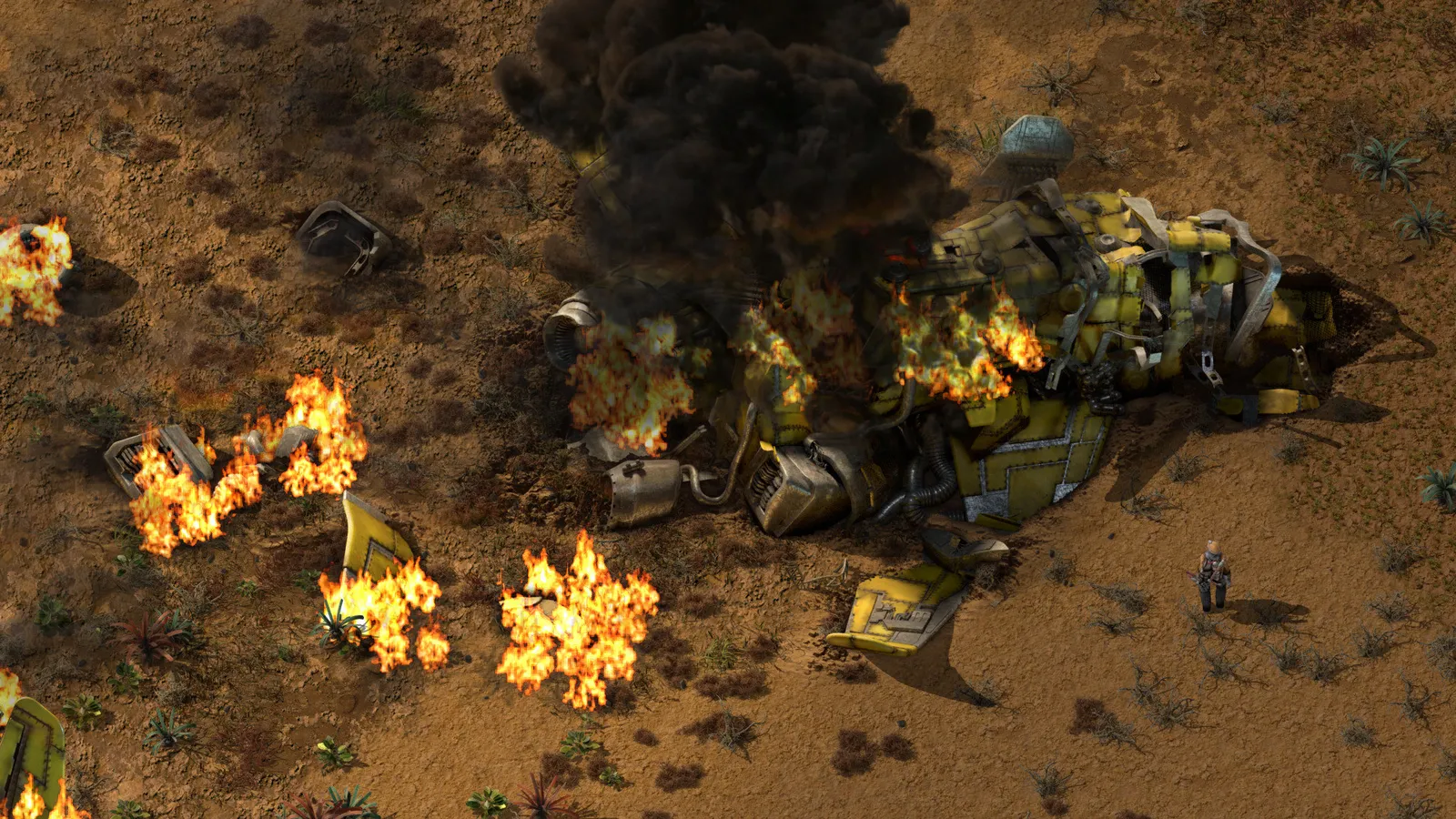
Space Age adds four planets: Vulcanus, Fulgora, Gleba and Aquilo. The first three can be done in any order, while Aquilo comes last, because its travel research needs items from the other three. Here is what each one offers and what can go wrong. Space Age launched on 21 October 2024 together with Factorio 2.0. Factorio 2.1 became stable on 23 October 2026 and added no new planets.
Getting off Nauvis
The Space platform research requires Rocket silo research. It unlocks the asteroid collector, cargo bay, crusher, three asteroid crushing recipes and the Space science pack. To create a platform, load a space platform starter pack into a rocket, or order one from remote view. A new platform is a 10 by 10 foundation square with a hub in the middle; the hub is the only part you cannot remove. Foundation weighs 0.2 tonnes per tile and the hub weighs 40 tonnes. Foundation must be one connected area with no holes and can extend up to 200 tiles north of the hub.
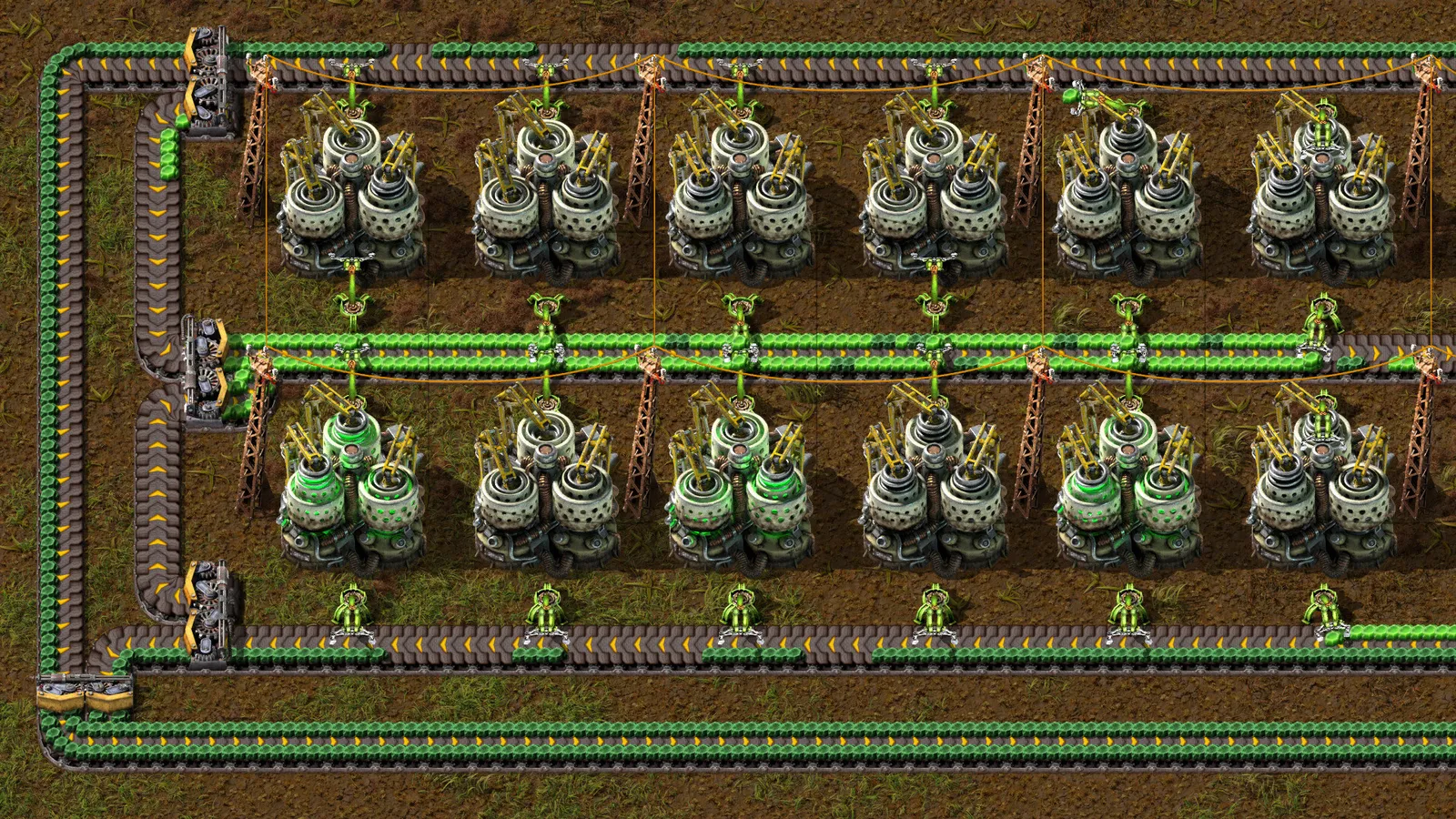
Each Space Age planet needs its own production line.
You need at least one thruster. Thrusters go on the south edge only, with no foundation in the 82 tiles south of them, and they burn fuel and oxidizer made from crushed asteroid chunks. More thrusters give more speed, but also more and faster asteroids. Collectors on the platform edge catch only the smallest chunks; larger asteroids damage the platform and have to be shot by turrets. A platform must be in orbit to exchange cargo, and routes with no direct path stop at intermediate planets, so a trip from Vulcanus to Fulgora passes Nauvis. A stationary Nauvis orbit only produces chunks, which makes it a safe place to build.
Planets at a glance
| Planet | Main resources | Hazard | Science pack |
|---|---|---|---|
| Vulcanus | Tungsten, lava, calcite | Demolishers, acid geysers, lava | Metallurgic |
| Fulgora | Scrap, heavy oil | Lightning | Electromagnetic |
| Gleba | Bacteria-grown iron and copper, water, stone | Spoilage, pentapods | Agricultural |
| Aquilo | Ammoniacal solution, lithium brine, fluorine, crude oil | Cold | Cryogenic |
Vulcanus
Vulcanus has tungsten (mined with the big mining drill), lava from an offshore pump, and calcite. Iron and copper ore are limited, so plates come from molten metal. There is no pollution, crude oil or wood. Demolishers are giant centipede-like enemies that patrol fixed territories, and building inside one invites an attack. Metallurgic science takes 200 molten copper, 3 tungsten carbide and 2 tungsten plate, made in the foundry. Research a power option other than steam first, because steam engines are an inefficient fallback here.
Fulgora
Scrap is the only resource, and you recycle it instead of smelting. Heavy oil comes from an offshore pump at an oil ocean, and holmium ore comes only from recycling scrap. Coal and uranium must be imported. Lightning at night deals 100 electric damage per strike, so use lightning rods or collectors. There are no enemies, and you build on plateaus only. The day and night cycle is 3 minutes and solar power is at 20% of normal. Electromagnetic science takes 1 accumulator, 25 electrolyte, 25 holmium solution and 1 supercapacitor, made in the electromagnetic plant.
Gleba
Gleba has water and stone, and iron and copper come from bacteria grown in the biochamber. Coal comes from coal synthesis and there is no crude oil. Spoilage is the main hazard: most biological items spoil, with timers from a few minutes up to 2 hours, and biochamber nutrients spoil in 5 minutes. Pentapods are attracted to spores. Solar power is at 50% and a day lasts 10 minutes. Agricultural science takes 1 bioflux and 1 pentapod egg.
Aquilo
Aquilo has ammoniacal solution, lithium brine, fluorine and crude oil, while stone, iron, copper and coal must be shipped in. Buildings freeze unless heated by a reactor or heating tower and heat pipes, and most buildings need a concrete floor on ice. Solar is only 1%. Travel research needs rocket turrets, advanced asteroid processing and heating towers (from Gleba), asteroid reprocessing (from Vulcanus) and the electromagnetic science pack (from Fulgora). Cryogenic science takes 6 cold fluoroketone, 3 ice and 1 lithium plate.
What Factorio 2.1 changed for platforms
- Rockets can carry several different items in one launch, and platforms can request items from and provide items to other platforms in orbit. An empty Import from slot makes a platform import from every location.
- Platform drag now depends on total mass instead of width, asteroid damage depends on the asteroid's remaining health, and the platform hub has more health.
- A landing pad unloading bay lets inserters take cargo straight into trains, chests or belts.
- Space Age can now be played without Quality, and quality modules no longer work in asteroid reprocessing.
Details such as foundation limits and thruster placement below were written for 2.0, so check the in-game Factoriopedia if a number does not match.
Quick tips
- Build and test your platform in Nauvis orbit before the first real trip.
- Bring a basic starter kit for each planet, and expect to improvise on Gleba and Aquilo.
- Your oil setup on Nauvis still matters; see the oil processing guide.
The Factorio page has requirements and settings.