The mechanics you need in Rocket League build on each other: boost control and a consistent first touch come first, then wave dashes, half flips and fast aerials, then speed flips and air dribbles, and only after that flip resets and ceiling shots. Community roadmaps place these in a rough order by rank, and this guide gives the order plus the exact inputs for the three moves people ask about most: the speed flip, the half flip and the wave dash. Ranks below are guidelines, not gates; good players learn things earlier or later than the table says.
Which mechanics should you learn at which rank?
Different roadmaps disagree by a rank here and there (the half flip is listed at Silver in one place and Gold in another), so read the middle column as "around this rank".
| Around rank | Mechanics to work on |
|---|---|
| Bronze to Gold | Consistent ball contact, boost management, recovery, basic positioning, camera settings, diagonal flips, powershots |
| Gold to Platinum | Half flip, wave dash, fast aerial, diagonal flicks, back post defence |
| Diamond | Speed flip kickoffs, air roll shots, power slides, flicks, shadow defence, first air dribbles |
| Champion | Air dribbles, ground-to-air dribbles, directional air roll, 45 and 90 degree flicks, backboard defence, first flip resets |
| Grand Champion and up | Flip resets in game, ceiling shots, double touches, pinches, redirects, wall stops |
If you are below Platinum, you will gain more rank from steady rotations and boost discipline than from any single mechanic. Our boost, speed and hitbox numbers article explains why boost control comes before the flashy stuff, and the camera and controller settings guide is worth finishing before you drill anything.
How do you speed flip?
A speed flip is a diagonal front flip that you cancel early and straighten with air roll, so you keep nearly all the flip's speed while landing quickly and pointing forward. It is the standard kickoff move from around Diamond. On a controller:
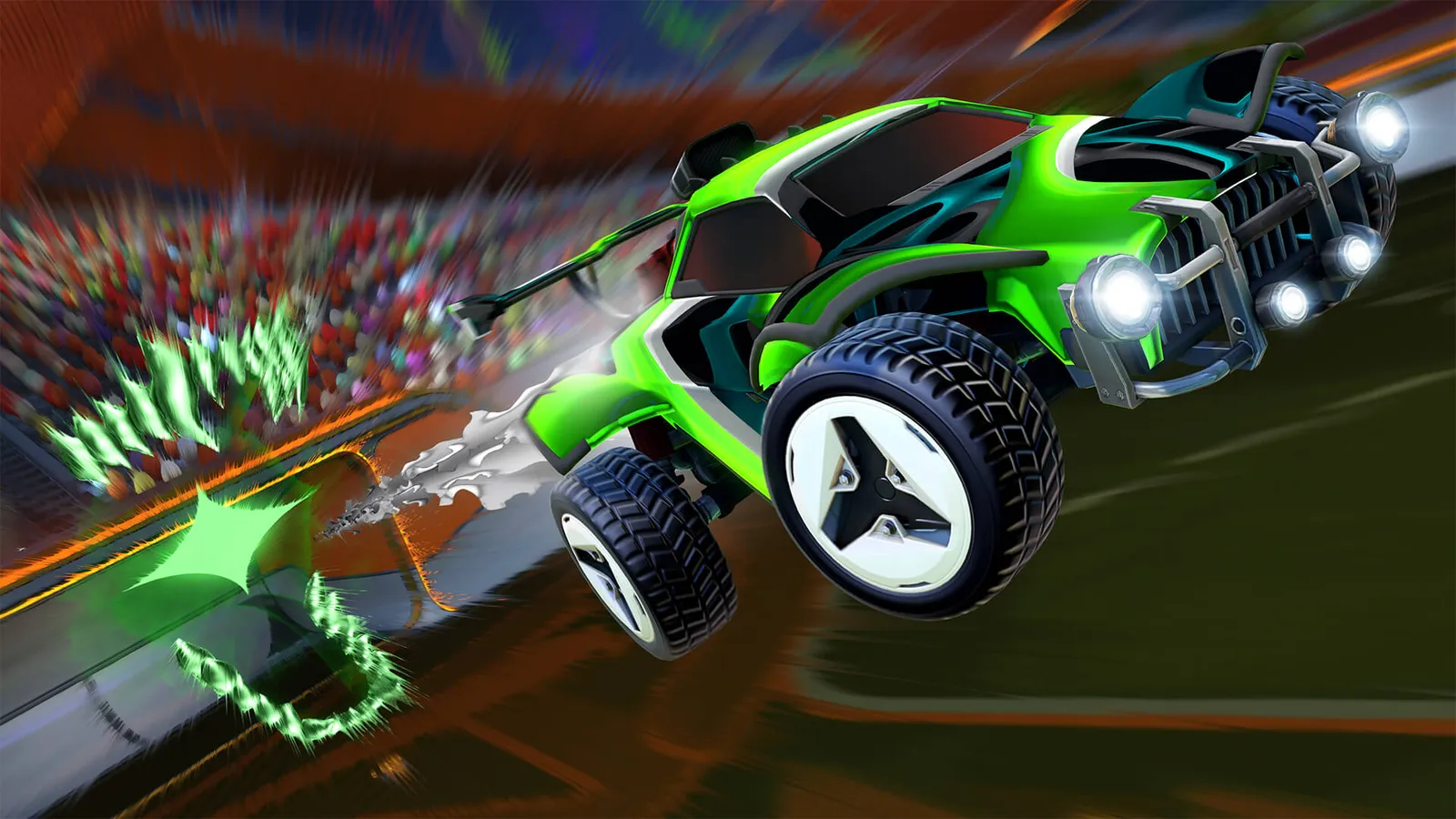
A diagonal flip is the base of the speed flip.
- Tilt the left stick slightly off straight up, roughly 15 to 30 degrees toward the side you want to flip. If the angle is too wide you lose forward momentum and land sideways.
- Hold boost from the start.
- Press jump, then jump again to start the diagonal front flip.
- Immediately after the flip starts, pull the stick straight down and hold it. This cancels most of the flip and keeps the nose forward.
- While holding down, press air roll toward the same side you flipped: air roll right for a right flip, air roll left for a left flip.
- Land on all four wheels, straight, and keep driving.
On keyboard and mouse, bind air roll left and right to two keys, press W plus D (or W plus A), tap jump twice, then press S plus the opposite side key to cancel. The most important thing is to practise the flip cancel by itself, without boost, until it feels automatic. After that, practise from the centre kickoff spot in free play, alternating left and right, and race yourself from your own goal line to the ball using only speed flips.
How do you half flip?
The half flip turns your car around fast when you are facing your own goal, which makes it the best tool for getting back on defence.
- Drive or flip backwards, toward your own goal.
- Jump and flip backwards, then cancel the flip halfway by pushing the stick the opposite way, forward, against your travel direction. This keeps the nose up so the car ends up on its roof.
- Add a barrel roll with air roll in either direction. Once the car is pointing toward the ball, pull the wheels back under you and land.
Get step 2 right before you add the roll. Many players do their first attempts with player cam and move to ball cam once they are comfortable. The half flip is a defensive and rotation tool, not a way to score, so use it when you are late, not as a replacement for a normal turn when you have time.
How do you wave dash?
A wave dash converts a landing into a burst of speed, which is handy when you are out of boost.
Boost and air roll keep the car pointed at the ball once it leaves the ground.
- Jump into the air.
- Pull the stick down slightly to tilt the nose up.
- Just before you touch the ground, quickly push the stick forward and flip forward, so all four wheels hit the ground right after the flip.
- To dash in a direction, air roll slightly the other way (to dash right, angle the car to the left).
The timing is the whole trick. Flip too early and you get an ordinary flip with no speed. Flip too late and you simply land. Three or more wave dashes in a row can bring a car without boost up to supersonic speed, and the move also lets you change the direction of a challenge at the last moment. Practise in free play in each direction before you chain them.
What comes after: air dribbles and flip resets?
Air dribbles are carrying the ball in the air with several successive touches. Most players start with ground-to-air dribbles that turn a bouncing ball into an air dribble, then graduate to bump-assisted versions in the highest ranks. A flip reset is when all four wheels touch the ball in mid-air and you regain your flip, which lets you use a second flip after the first. These are time sinks: practise them in custom training packs, 10 minutes at a time, after your fundamentals are solid. Chain resets, ceiling shots and musty flicks are Grand Champion material and rarely a good use of practice time below Champion.
Quick tips
- Pick one mechanic, drill it daily in free play, and only then take it into ranked.
- Do not attempt a speed flip or air dribble in a tense match until you hit it nine times out of ten in training.
- Use the replay and a short clip of your last attempt to spot wrong cancel timing.
- Rotations and boost control outrank any flashy move up to at least Diamond.