Skip to content
Set up my rig
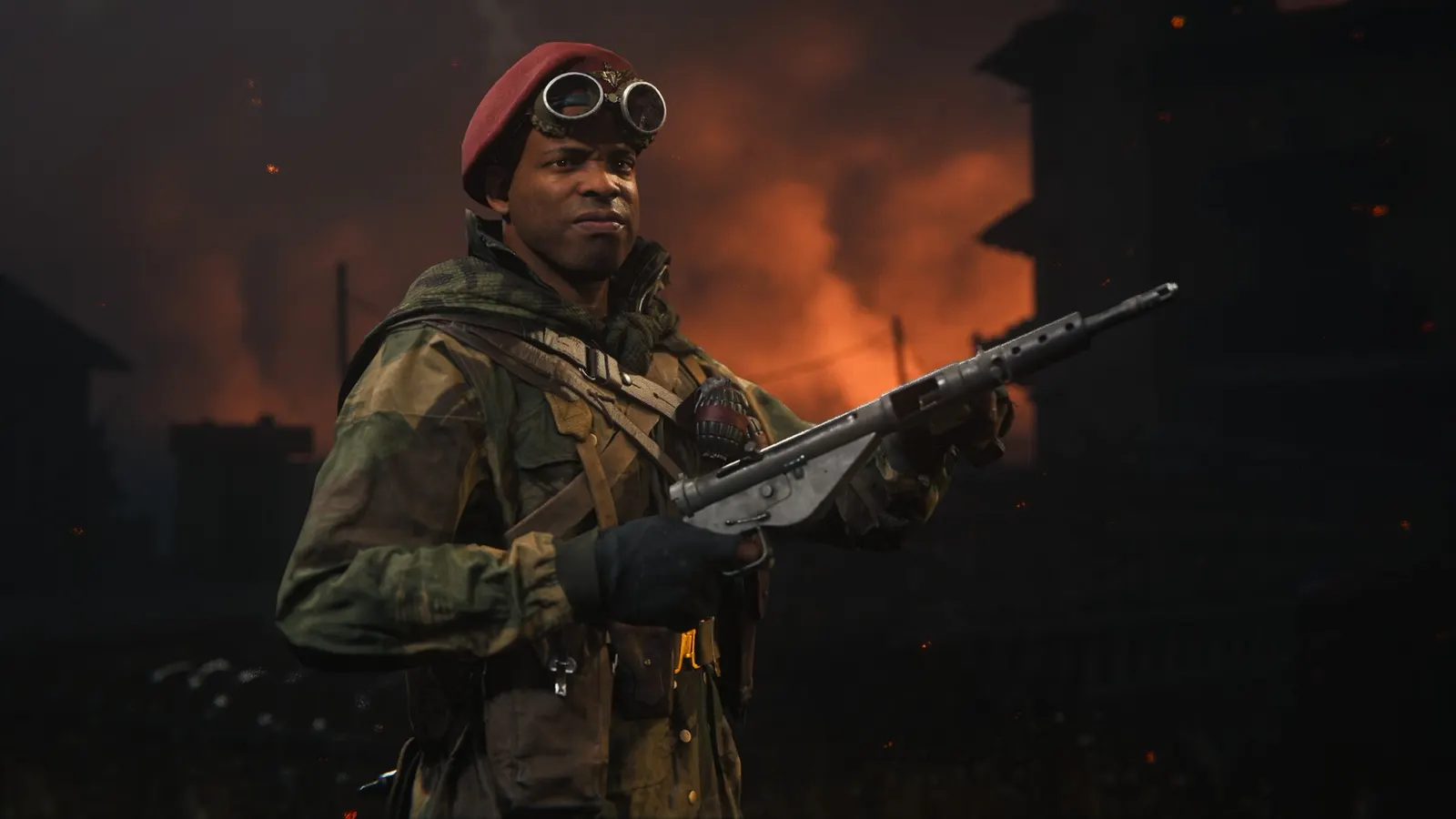
Call of Duty: Vanguard, official artwork

Call of Duty: Vanguard FPS boost and stutter fix

The biggest frame costs in Call of Duty: Vanguard are Quality Preset, Particle Quality Level, Particle Resolution. Start there, then work through the stutter checklist.

Updated . Game data researched November 2026.

  • PEGI 18
  • Competitive
Genre
First-person shooter
Developer
Sledgehammer Games / Activision
Released
2021
Platforms
PC, Xbox, PlayStation

Which Call of Duty: Vanguard settings cost the most FPS?

Quality Preset

Start from the preset, then change single options below. Low to Ultra is only about 10 to 15 percent on a fast card but up to 2x on a weak one.

Low

Particle Quality Level

Keep it high enough that smoke and dust stay readable; lower Particle Resolution instead to save frames.

High

Particle Resolution

Burning, particle-heavy scenes were the slowest ones in ComputerBase's test.

Low

Shadow Map Resolution

Lower shadow resolution costs a little sharpness but gains frames on every card.

Normal

Volumetric Quality

Fog and light shafts are expensive and mostly cosmetic.

Low

Values shown are what we pick for max FPS (visibility kept where it matters). Section names follow the in-game menu.

Upscaling and latency in Vanguard

  • Upscaling: NVIDIA DLSS, AMD FSR. Use the Quality mode first; at 1080p avoid Balanced and Performance, they get blurry.
  • Frame generation: not available in this game.
  • Latency: NVIDIA Reflex. Turn it on; it lowers input lag with no image cost.

Upscaling explained

How do I fix stuttering in Call of Duty: Vanguard?

Vanguard: Mind the texture streaming size

  1. Vanguard can stream high-resolution textures to disk; the size is configurable and defaults to 32 GB.
  2. In Vanguard, if your SSD is small, lower it, or the game uses the space the full install needs on top (up to 177 GB with Warzone).

In Vanguard, ComputerBase describes a 12 to 64 GB range for the streaming cache.

Vanguard likes CPU cores

  1. TechSpot found Vanguard to be the one tested game with more than a 10 percent gap between a 6-core and an 8-core Ryzen.
  2. In Vanguard, if your GPU usage stays low in a match, lower CPU-heavy options (particles, shadows) instead of the resolution.

Checklist for every PC

  • Install the game on an SSD: a hard drive causes texture pop-in and hitches. Call of Duty: Vanguard wants 16 GB of RAM; close browsers and launchers while playing.
  • Lower Textures one step if your graphics card has 8 GB of VRAM or less and you see sudden drops.
  • Let shaders finish compiling on first launch and after driver updates; the first match can stutter.
  • Enable XMP/EXPO so your RAM runs at its rated speed, and update your graphics driver.
  • Check that Windows runs your monitor at its full refresh rate: how to check.
  • Turn on Game Mode and Hardware-accelerated GPU scheduling: Windows gaming settings.

Call of Duty: Vanguard settings for a low-end PC

SettingLow-end value
Display ModeFullscreen Exclusive
Display ResolutionYour monitor's native resolution; scale with the upscaler instead
NVIDIA Reflex Low LatencyOn with NVIDIA Reflex on GeForce
Sync Every Frame (V-Sync)Off; use G-Sync or FreeSync with an FPS cap instead
Framerate Limit3 below your refresh rate (141 on 144 Hz); uncapped for max FPS
Quality PresetLow
UpscalingNative; DLSS Quality on RTX, FSR Quality on AMD and older GeForce
Render Resolution100
VRAM Usage Target75
Texture ResolutionLow
Particle Quality LevelLow
Particle ResolutionLow
Shadow Map ResolutionLow
Volumetric QualityLow
TessellationNear
Ambient OcclusionOff
Screen Space ReflectionOff
Filmic Strength0
Field of View105