Skip to content
Set up my rig
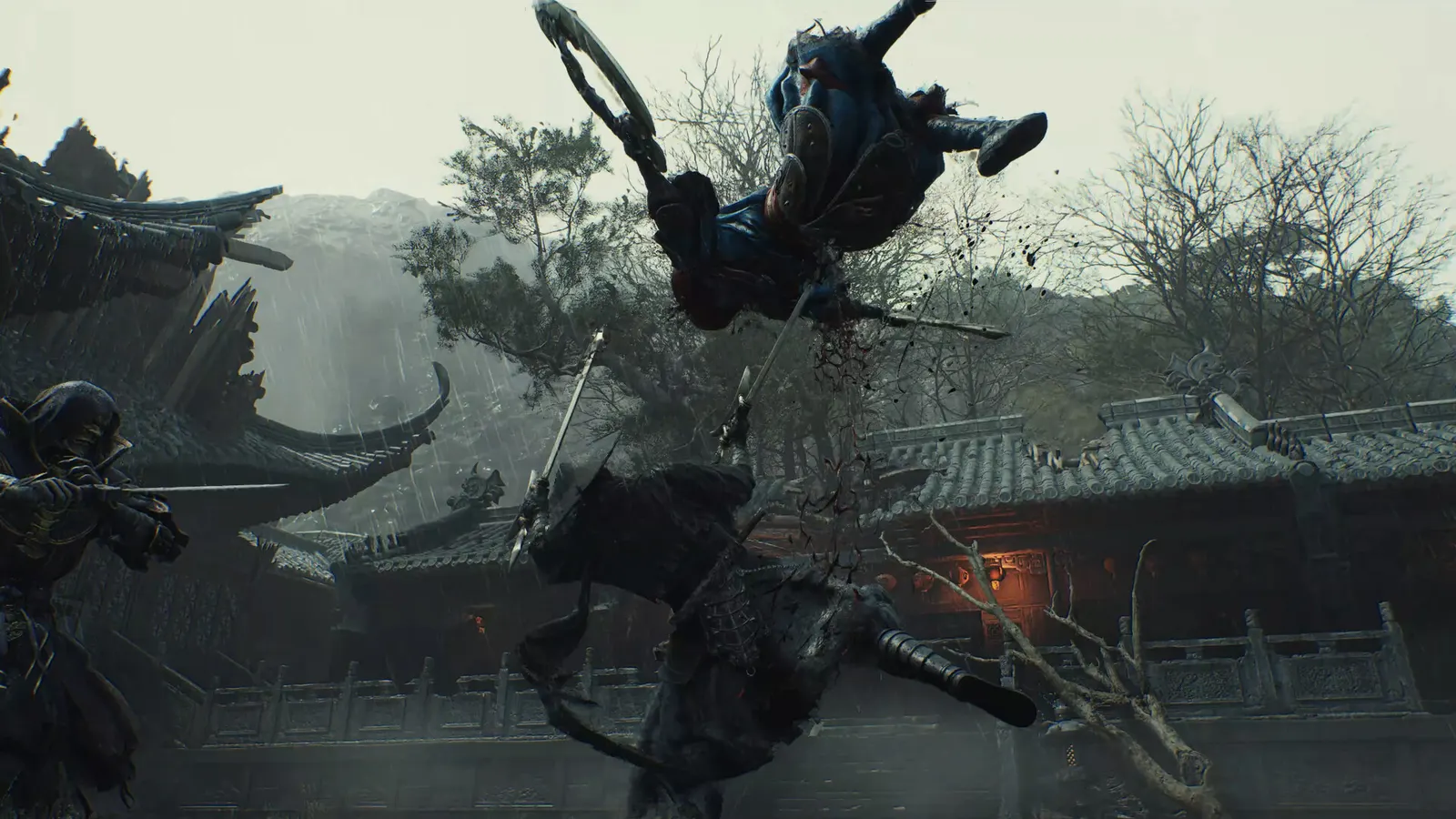
Phantom Blade Zero, official artwork

Phantom Blade Zero FPS boost and stutter fix

The biggest frame costs in Phantom Blade Zero are Quality Preset, Shadow Quality, Lighting Quality. Start there, then work through the stutter checklist.

Updated . Game data researched November 2026.

Genre
Action RPG
Developer
S-GAME
Released
2026
Platforms
PC, PlayStation

Which Phantom Blade Zero settings cost the most FPS?

Quality Preset

TechPowerUp measured Ultra at 44 fps against 54 for Very High, 63 for High and 84 for Low on an RTX 4080 at 2560x1600. Medium is a minor step above Low.

Low

Shadow Quality

Usually one of the heaviest options in Unreal Engine 5.

Low

Lighting Quality

Global illumination quality; lowering it flattens the look of the scene.

Low

Reflection Quality

Screen-space and Lumen reflections without ray tracing.

Low

Post-Processing Quality

Bloom and similar screen effects.

Low

Effects Quality

Particles and combat effects, which pile up in group fights.

Low

Material Quality

Shader complexity of surfaces.

Low

Ambient Occlusion Quality

Contact shadows in corners and under objects.

Low

Anti-Aliasing

Temporal anti-aliasing; with DLSS or FSR active the upscaler does this job.

Low

View Distance

How far environment detail is drawn.

Low

Values shown are what we pick for max FPS. Section names follow the in-game menu.

Upscaling and latency in PBZ

  • Upscaling: NVIDIA DLSS, AMD FSR, Intel XeSS. Use the Quality mode first; at 1080p avoid Balanced and Performance, they get blurry.
  • Frame generation: NVIDIA DLSS frame generation, AMD FSR frame generation. Only turn it on when you already have 50+ fps, and keep it off in competitive matches: it adds input lag.
  • Latency: NVIDIA Reflex. Turn it on; it lowers input lag with no image cost.

Upscaling explained

How do I fix stuttering in Phantom Blade Zero?

PBZ: Mind your graphics driver

  1. In PBZ, S-GAME advised NVIDIA owners to use driver 617.42 because 621.01 can cause unstable performance at launch.
  2. In PBZ, check the latest patch notes and driver release notes before you troubleshoot.

In PBZ, reported by Notebookcheck from S-GAME's launch communication; may be outdated by newer drivers.

PBZ: First launch compiles shaders

  1. In PBZ, the first start compiles shaders, which can take a few minutes; do not close the game during it.
  2. In PBZ, stutter in new areas right after an update usually settles once shaders are cached.

PBZ: Use an upscaler as a normal setting

  1. In PBZ, native Ultra is hard even on high-end cards; DLSS, FSR or XeSS in Quality mode gives a large gain with little visible loss.
  2. In PBZ, the official recommended spec (RTX 3060 Ti, 1440p, 60 fps) assumes upscaling.

PBZ: Install on an SSD

  1. In PBZ, Steam lists 145 GB and requires an SSD.
  2. In PBZ, on a hard drive expect long loads and texture pop-in.

Checklist for every PC

  • Install the game on an SSD: a hard drive causes texture pop-in and hitches. Phantom Blade Zero wants 16 GB of RAM; close browsers and launchers while playing.
  • Lower Textures one step if your graphics card has 8 GB of VRAM or less and you see sudden drops.
  • Let shaders finish compiling on first launch and after driver updates; the first match can stutter.
  • Enable XMP/EXPO so your RAM runs at its rated speed, and update your graphics driver.
  • Check that Windows runs your monitor at its full refresh rate: how to check.
  • Turn on Game Mode and Hardware-accelerated GPU scheduling: Windows gaming settings.

Phantom Blade Zero settings for a low-end PC

SettingLow-end value
Window ModeFullscreen
ResolutionYour monitor's native resolution; scale with the upscaler instead
Frame Rate Limit3 below your refresh rate (141 on 144 Hz); uncapped for max FPS
V-SyncOff; use G-Sync or FreeSync with an FPS cap instead
Motion BlurOff
Quality PresetLow
Super Resolution MethodNative; DLSS Quality on RTX, FSR Quality on AMD and older GeForce, XeSS on Intel Arc
Frame GenerationOff below 50 fps; above it DLSS frame generation on RTX 40 and 50 or FSR frame generation elsewhere; never in competitive play
NVIDIA ReflexOn with NVIDIA Reflex on GeForce
Ray Tracing QualityOff
Shadow QualityLow
Lighting QualityLow
Reflection QualityLow
Post-Processing QualityLow
Effects QualityLow
Material QualityLow
Ambient Occlusion QualityLow
Depth of Field QualityLow
Anti-AliasingLow
View DistanceLow
Character Texture QualityLow
Environment Texture QualityLow
High-Quality HairOff